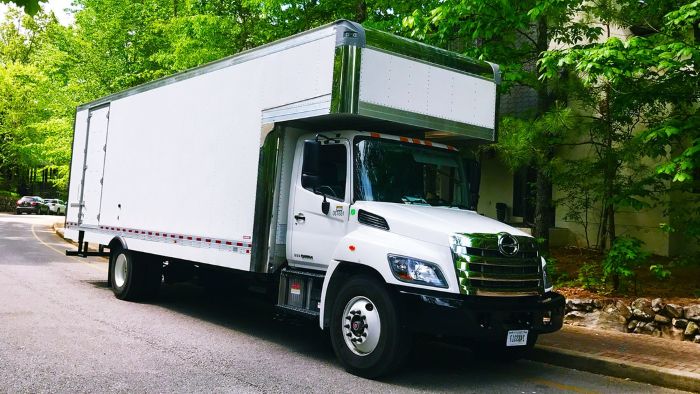
A long distance move is usually the biggest single purchase in a relocation, and it has traditionally been bought in the worst possible way: a week of phone calls, a parade of salespeople through your living room, a stack of estimates that do not agree, and no way to tell a real carrier from a broker with a website and a phone number.
Agoyu was built to end that. Think Expedia for moving: a patented AI platform (U.S. Patent No. 12,602,645 B2) where you scan your home once, see the exact published rates from real long distance movers, or post your move and let movers bid on it, with every mover’s licensing, complaint record, and reviews on the same screen as their price.

Scan Your Home. Get Exact Moving Costs in Minutes
Agoyu’s AI video scanning technology gives you quick, precise moving estimates. Scan your rooms, receive instant quotes from multiple vetted movers, and select the best option for you.
STEP 1 OF 3
Key Numbers: Long Distance Moving on Agoyu
- 86 long distance movers in the platform, fully vetted before they were admitted, competing for the same move.
- $100,000 of insurance with no deductible included in the price, not sold back to you as an add on.
- 12 bids/offers for a discount on an average posted cross country move, from movers with trucks already rolling.
- 23% average gap between the first published rate and the winning bid on the same move.
- Up to 30% capacity discount when your shipment fills space on a truck already routed your way. This is the secret sauce! A truck traveling the same route, with capacity!
- Average of 25 movers with published rates shown per lane (moving to and from). Priced from your scan in minutes.
- 41% spread between the highest and lowest price quoted for the identical scanned move. Same home, same route, same dates.
What a Long Distance Move Actually Costs
Long distance moving is generally any move that crosses a state line, or runs more than about 400 miles. Price is built from three things: how much you have (weight and volume), how far it is going, and how the truck that carries it is being used, the part that moves the number the most. We will get to that in the capacity section below. First, the honest baseline: what moves like yours cost when they are priced from real scanned inventories instead of guesses.
| Home size | Typical weight | Cross country price range |
| Studio | 1,800 lbs | $2,900 to $4,600 |
| 1 bedroom | PLACEHOLDER: 2,600 lbs | PLACEHOLDER: $3,800 to $5,900 |
| 2 bedroom | PLACEHOLDER: 4,100 lbs | PLACEHOLDER: $4,900 to $7,400 |
| 3 bedroom | 5,900 lbs | $6,400 to $9,800 |
| 4 bedroom | 8,200 lbs | $8,900 to $15,500 |
Treat any single number you see on the internet for "the cost of a long distance move" with suspicion, including a tidy average. Your price depends on your actual inventory, and two movers pricing the same home routinely land thousands of dollars apart. Our guide to how much it costs to move breaks down what drives a total up or down, and our companion page on the cheapest moving companies explains why the cheapest mover for your move is found by pricing it, not by finding it on a list.
The Real Price of a Long Distance Move Is Capacity
Here is the thing the moving industry has never put in an advertisement: movers do not just sell labor and miles. They sell space in a truck that is already going somewhere.
A long distance truck runs a route. If that truck is heading across the country with room left in it, the empty space earns the mover nothing, so space on that truck is cheap. If a mover has to send a truck out of its way for you, or turn away other work to take your move, your price carries all of that cost. Same mover, same crew, same care with your furniture. Completely different price, decided by which way the trucks are rolling on your dates.
That is why the size of your shipment matters so much on a long distance move:
A small or partial shipment fits into space left on a truck that is already going your way. This is where the deepest discounts in moving live, because your move is pure found money to a mover whose truck is rolling past your new city half full.
A big shipment that fills a whole truck sounds like the expensive case, and at published rates it is. But bid it out anyway. A full truck is the most efficient load a mover can run: one pickup, one delivery, no time spent combining households. Movers jump at full truck moves, and when several of them want the same load, the bids show it.
Agoyu is where that capacity market actually happens. There are 86 of the best long distance movers in the US in the platform, and at any given time multiple of them have trucks on the road with space to fill. You can see their published rates. But capacity is where the best price is, so Agoyu also lets those movers bid on your move and discount to win it. A static list cannot show you any of this, because capacity changes every day. A live platform can, because the trucks are live too.
How Long Does a Long Distance Move Take?
The second question everyone asks is how long the truck takes, and the honest answer is that it depends on the size of your shipment and how many stops the truck makes on the way.
A full truck carrying only your household drives close to straight through. A partial shipment usually travels consolidated: your belongings share the truck with other households going the same general direction, the truck stops to load and unload along the route, and each stop adds time. A small shipment may wait to be combined with enough freight to justify the run, then make the most stops of all. [ALL FIGURES IN THIS TABLE ARE PLACEHOLDERS, replace with real delivery data before publishing. Basis: cross country move of roughly 2,500 to 2,800 miles.]
| Shipment type | How it travels | Typical delivery window |
| Full truck, direct | Your household only, no stops | [PLACEHOLDER: 3 to 7 days] |
| Partial load, consolidated | Shared truck, a few stops | [PLACEHOLDER: 7 to 14 days] |
| Small shipment | Fully consolidated, most stops | [PLACEHOLDER: 10 to 21 days] |
There is a fourth option, and it exists because Agoyu movers can bid on the terms as well as the price. Some movers in the platform will bid to ship your move direct, no stops, regardless of the size of the shipment. It costs slightly more, on average 12% more than the consolidated price for the same load, because the truck is running for you alone. In exchange you get the fastest transit and the tightest delivery window. If you are starting a job on a fixed date, or your new home closes on a fixed date, you can see exactly what that speed costs before you choose it.
Whichever option you pick, your pickup and delivery dates are agreed and documented in the platform when you book, not estimated over the phone and renegotiated later. More on that in the documentation section below.
How Agoyu Works, Step by Step
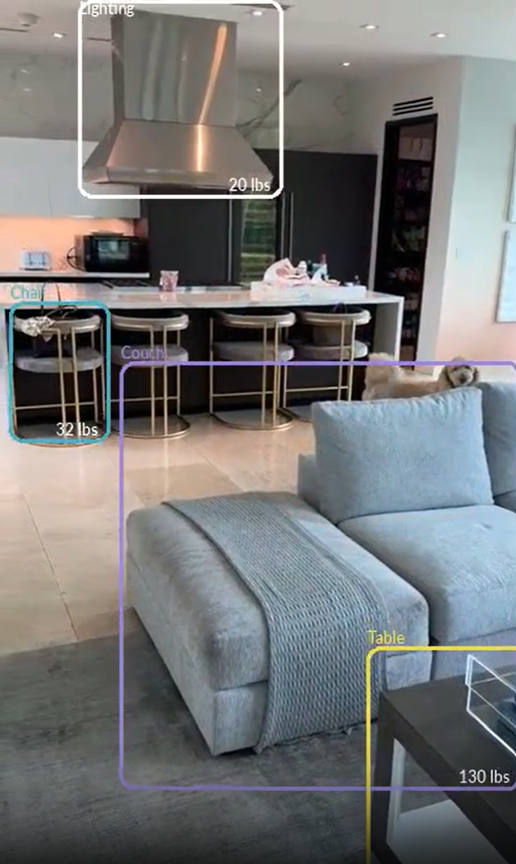
Step 1: Scan your home.
You walk through your rooms with your phone and Agoyu's AI does the inventory: it recognizes what you own, item by item, builds the list, and estimates the weight. This step is the whole foundation. Every price in long distance moving is built on the inventory, and the traditional inventory, a salesperson eyeballing your living room or you typing a list from memory, is where bad quotes are born. The scan documents what you actually have, in minutes, before anyone prices anything.
Step 2: See exact prices.
From that one scan, Agoyu shows you the exact cost to move through long distance movers with published rates, side by side, for your home, your route, and your dates. No callbacks. No estimate visits. No range that quietly grows later.
Step 3: Or post your move for bids.
Put the move out and the movers in the platform bid on it. This is where capacity works for you: a mover with space on a truck going your way can bid a price nobody running a dedicated truck can match, and a mover who wants your full truck will bid like it.
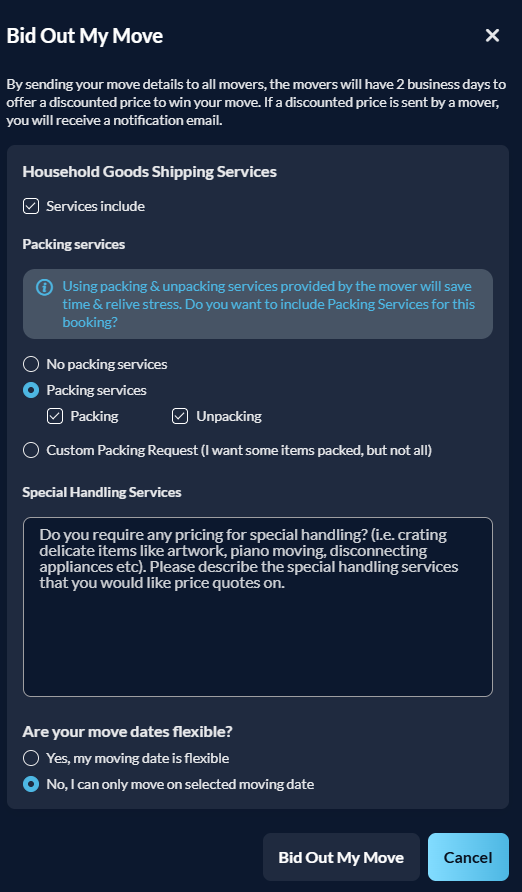
Step 4: Compare the whole picture.
Every bid shows its price, whether that price is guaranteed, and the mover behind it: US DOT licensing and complaint record, BBB rating, Yelp reviews, accreditations. Price and record on one screen, which is the screen this industry has never wanted you to have.
Step 5: Book in the platform.
Pick your mover and your packing level, from packing yourself to full packing and unpacking, and book. The agreed price, the dates, the inventory, and the terms are all in the platform record. Like Expedia and Amazon, Agoyu is free to the consumer. The movers compete for your business. You watch the prices and pick.
Guaranteed Pricing: No More Bait and Switch
Guaranteed pricing is the most important thing to look for when comparing movers, because a price that is not guaranteed can change on moving day, and a low number that can go up is not really a low price. The classic long distance bait and switch depends on that gap: a low estimate wins the booking, the truck gets loaded, and somewhere on the road the real price appears, with your belongings already on board.
In Agoyu, every bid clearly shows whether the mover guaranteed the rate or not. If the rate is guaranteed, it is locked in: it can go down, but it cannot go up. If a mover does not guarantee their rate in the platform, Agoyu requires that the mover either complete a visual survey of your home within one week or less and issue a guaranteed bound quote, or honor the rate they put in the platform. Either way, your price becomes a firm commitment before your move, not a number that can be renegotiated with your furniture on the truck.
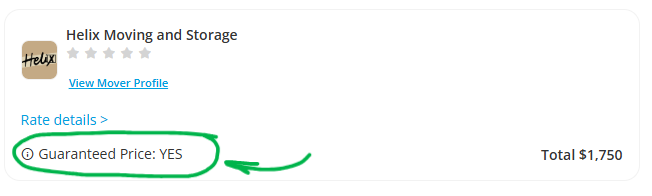
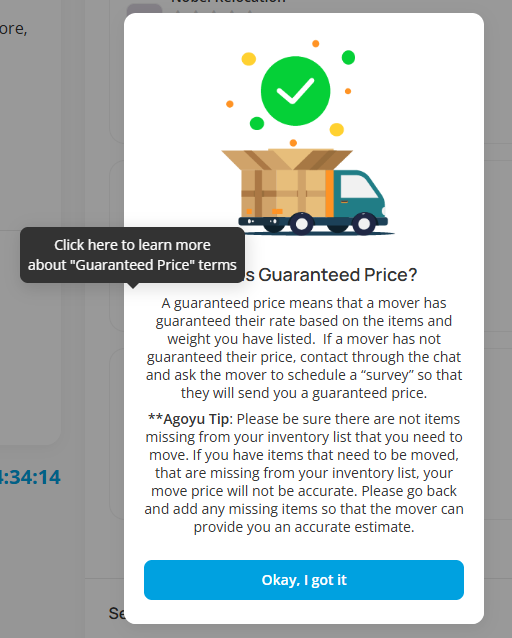
Compare the guarantee first and the number second. The cheapest guaranteed price will beat the cheapest maybe price every single time.
Vetted Movers, Real Records, and Insurance Included
Every mover is vetted before they get in. Agoyu does not let any company with a truck and a website onto the platform. Movers are vetted before they are admitted, and once they are in, their record stays attached to their name, next to their prices.
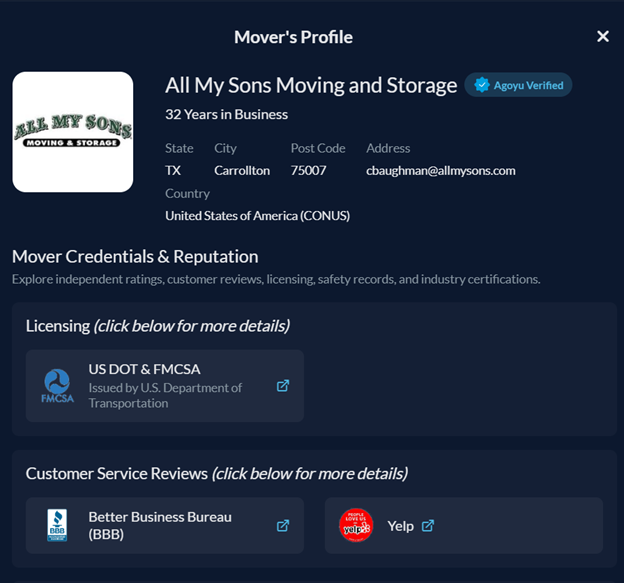
US DOT licensing and record. Interstate movers are licensed through the U.S. Department of Transportation. On every mover's profile you can see their full DOT licensing status and their complaint record: the official history of how that company has treated customers, including complaints and violations. A mover cannot hide it, because it sits right next to the price they are asking you to pay.
BBB rating and Yelp reviews. The Better Business Bureau rating shows how a company handles complaints and how long it has operated. Yelp reviews show real customer experiences in their own words. Read for patterns: one bad review is a data point, ten reviews describing the same raised price or missed delivery window is who that mover is.
Accreditations. Industry memberships and certifications that show a mover submits to outside standards instead of just claiming them.
Insurance is included, not upsold. Every move booked through Agoyu includes full insurance with no deductible up to $100,000, in the price you saw when you booked. No surprise coverage pitch at the contract table, no discovering after the fact that the "coverage" included in a cheap quote pays sixty cents a pound. If the worst happens, you are covered to a real number, and the section below explains why a claim on Agoyu is a paperwork exercise instead of a fight.
Digitized and Documented: The Smart Contract Move
Travel used to be booked the way moving still is: phone calls, paper, and trust me. Expedia digitized travel. Amazon digitized retail. Agoyu has digitized moving, and digitizing is not a cosmetic upgrade. It changes who holds the power, because everything about the move is written down, agreed, and on record before it happens.
Your Agoyu booking works like a smart contract for your move. The inventory is the scan, documented item by item. The price is the published rate or the winning bid, with its guarantee status stated. The pickup and delivery dates are agreed in the platform. The mover's licensing and record were on the screen when you chose them. And on move day, the condition of your goods is documented on video as they are loaded, so the condition of everything that left your home is never a matter of opinion.
That record is what ends the nightmare scenarios. A mover cannot claim your load weighed twice the scanned inventory. Cannot hold your delivery hostage to a price that exists nowhere in writing. Cannot dispute the condition an item left in when the video shows it. No more scam movers works when the scam has nowhere left to hide.
If something does go wrong: claims. Damage happens even with good movers, and the claims process is where undocumented moves go to die: he said, she said, a paper inventory nobody can read, and coverage worth pennies. On Agoyu the claim starts from the record. The scanned inventory says what was moved. The load video says what condition it was in. The included insurance, full coverage with no deductible up to $100,000, says what it pays. When everything about the move is already documented, a claim is a short, factual process instead of an argument.

The Old Way Eats Your Week, and Scams Eat the Rest
Consider what finding a legitimate long distance mover the traditional way actually costs you before any money changes hands. You search, and the first page of results is brokers and lead sellers mixed in with real carriers. You fill in a form and your phone rings for a week; industry lead forms are commonly sold to 8 to 12 companies at once. You host estimate visits. You collect quotes built on inventories each salesman invented differently, so the quotes cannot really be compared. By the time you book, you have spent 10 or more hours and you still do not actually know who is real.
The scam playbook runs on exactly that darkness. The Federal Motor Carrier Safety Administration receives more than 7,000 consumer complaints about household goods movers in a typical recent year [PLACEHOLDER, verify the exact figure and year against FMCSA before publishing], and the recurring pattern is the low quote that becomes a hostage negotiation once the truck is loaded. A broker who will never touch your furniture takes a deposit and sells your move to whoever bids lowest for it. A carrier with complaints and violations operates behind a fresh name. None of it survives documentation: a scan that fixes the inventory, a price that is guaranteed in writing, a DOT record pinned to the bid, and dates agreed before the truck rolls.
"Best Long Distance Movers" Lists Cannot Price Your Move
The other shortcut people take is the ranked list: "best long distance movers," scored, badged, and ranked. Ask a simple question of any such list. Has the writer seen your home? Have they seen the mover's truck, its route this week, or its space left on Friday? The answer is no, and yet the list ranks movers for your move anyway. Most of these lists are pay to play: placement follows affiliate payouts, and the "research" is a spreadsheet of commissions. A ranking written for nobody in particular cannot tell you the price for somebody specific, and price, it turns out, is the entire question.
Agoyu's answer is not a better list. It is the end of the list: live published rates and live bids on your actual scanned move, from 86 vetted long distance movers, with their DOT records, BBB ratings, and Yelp reviews attached to every number. That is the way of the future for this industry, and it is not coming. It is here. Use AI, digitize, document everything, and pick on facts.
About the Data on This Page
The pricing and delivery figures on this page come from moves actually priced on the Agoyu platform between 10/01/2025 and 10/01/2025, covering 2,000 long distance moves. Averages are calculated from exact prices generated from AI room scans and from bids submitted by movers, not from surveys, advertised starting prices, or third party listicles. Weight figures come from the AI inventory scans themselves. Delivery windows are calculated from actual pickup and delivery dates on completed moves. Complaint figures come from US DOT records as surfaced in mover profiles on Agoyu, and national complaint context is drawn from the Federal Motor Carrier Safety Administration. Figures are refreshed quarterly so this page reflects what long distance moves cost now, not what they cost when a list was written. Last updated: 11/11/2026.
Frequently Asked Questions
Q: What counts as a long distance move?
A: Generally, any move that crosses a state line, or runs more than about 400 miles within one state. Long distance moves are regulated at the federal level, priced mainly by weight and distance, and carried on trucks that often run multi state routes, which is why capacity and delivery windows matter so much more than they do on a local move.
Q: How much does a long distance move cost?
A: It depends on your home's size and weight, the distance, your dates, and the services you choose. As a placeholder guide, a cross country move runs roughly from $2,900 to $4,600 for a studio to $8,900 to $15,500 for a four bedroom home. The only number that matters is the price for your actual move, and that is what an Agoyu scan produces in minutes.
Q: How long does a long distance move take?
A: It depends on the size of the shipment and how many stops the truck makes. A full truck shipped direct typically arrives in 3 to 7 days cross country. A consolidated partial load takes 7 to 14 days, and a small fully consolidated shipment 10 to 21 days. Some Agoyu movers will bid a direct, no stops shipment at any size for slightly more, which buys the fastest window.
Q: What is capacity pricing?
A: Movers sell space in trucks that are already traveling routes. If a truck is heading your way with space in it, that space is cheap, and a mover will discount hard to fill it rather than haul air. Your shipment size decides how you use capacity: a partial load fits into leftover space at a deep discount, and a full truck is the most efficient load a mover can run, so movers bid aggressively for those too. Agoyu makes that capacity visible by putting your move in front of 86 long distance movers whose trucks are on the road now.
Q: Are delivery dates guaranteed?
A: Your pickup and delivery dates are agreed and documented in the platform when you book, as part of the same record that holds your guaranteed price and your scanned inventory. That is a different world from a phone estimate and a verbal window: the commitment exists in writing, with the mover's name on it, before the truck rolls.
Q: What insurance is included with an Agoyu move?
A: Full insurance with no deductible up to $100,000 is included in the price of every move booked through Agoyu. It is not an add on sold at signing, and it is real coverage to a stated dollar figure, which, combined with your scanned inventory and load video, makes any claim a documented, straightforward process.
Q: How do I know a long distance mover is legitimate?
A: Check three things, all of which sit on every Agoyu mover profile: their US DOT licensing status and complaint record, their BBB rating, and their customer reviews on Yelp, plus any industry accreditations. Then add the platform layer: Agoyu vets every mover before admitting them, so a company operating behind a fresh name with a hidden complaint history does not get in front of you in the first place.
Q: Why do bids for the same move differ so much?
A: Because each mover is pricing a different business situation: their truck capacity that week, their route, their local costs, and how they price services like packing and crating. A mover with space going your way can bid a price a mover running a dedicated truck cannot touch. That spread, [PLACEHOLDER: 41%] between high and low on the same scanned move in Agoyu's data, is not a defect in the market. It is the market, and it is why you want bids instead of a single quote.
Get Your Real Long Distance Price
You came here looking for a long distance mover you can trust at a price you can believe. The old way gives you a week of phone calls, estimates built on guesses, and names off a list somebody was paid to write. Agoyu gives you the whole picture in one place: a scan that documents what you own, exact published rates, live bids driven by real truck capacity, guaranteed pricing with no bait and switch, vetted movers with their DOT records in the open, guaranteed dates, video documented condition, and $100,000 of no deductible insurance included.
Scan your rooms, see your price, and book the move the way travel and retail are already booked: digitized, documented, and on your terms. Peace of mind is not a slogan in long distance moving. It is what is left when every fact about your move is in front of you before you commit.


