Moving to Spain From the US: Visas, Shipping, Customs and Starting Life There
Moving to Spain from the US is two moves at once. One is legal and logistical: a residence visa, a household shipment that crosses an ocean, and a customs exemption with strict conditions and deadlines. The other is personal: late lunches, regional languages, a new healthcare system, and a daily rhythm that runs hours behind […]
Shop Movers with AI


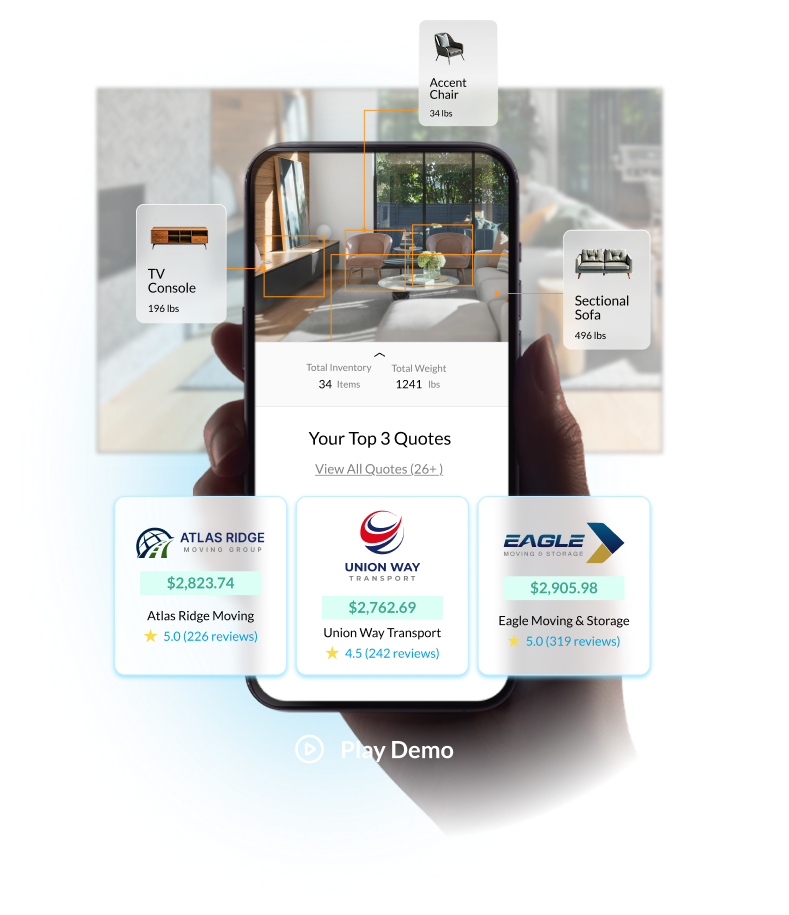
Moving to Spain from the US is two moves at once. One is legal and logistical: a residence visa, a household shipment that crosses an ocean, and a customs exemption with strict conditions and deadlines. The other is personal: late lunches, regional languages, a new healthcare system, and a daily rhythm that runs hours behind the American one. This guide covers both, in the order you will actually face them: the right to live there first, then the shipment, then the life.
One honesty note up front. Agoyu’s platform is global: alongside its 86 US long distance movers, every country in the world is built in except countries the United States restricts (North Korea is the example), moves between two countries that never touch the US are supported, and many movers in the platform are not US based and serve international routes only. So a move to Spain can be priced and booked in Agoyu end to end, ocean leg and Spanish delivery included, with the scan, exact pricing, and included insurance applying to the whole move as booked. This guide covers the visa, customs, and cost of living ground around that booking, from the official Spanish sources named in it.
Key facts for a US to Spain move
- Short stays: US citizens can visit Spain and the Schengen Area for up to 90 days in any 180 day period without a visa. Living there takes a residence visa, applied for at the Spanish consulate for your US place of residence before you move.
- Up to 25 moving quotes in under 3 minutes on an average lane, from published rates plus discount asks, once your home is scanned and your move is priced in Agoyu.
- Non-lucrative visa income test (2026): 400 percent of Spain’s IPREM index. With IPREM at 600 euros per month, that is 2,400 euros per month, or 28,800 euros per year, for the main applicant, plus 600 euros per month (7,200 euros per year) for each family member. Source: Spanish consular guidance on the non-lucrative visa, figures checked November 2026.
- Customs relief: Used household goods can enter Spain free of import duty and VAT under the change of residence exemption, if you lived outside the EU for at least 12 consecutive months, owned and used the goods for at least 6 months, and import them within 12 months of taking up residence. Source: Agencia Tributaria (Spanish Tax Agency), change of residence guidance, checked November 2026.
- Tax residency: Living in Spain more than 183 days in a calendar year generally makes you a Spanish tax resident, taxed on worldwide income. Source: Agencia Tributaria. Get advice before you move, not after.
- The Golden Visa is gone: Spain ended its investor residence route in April 2025. Any guide that still offers it is out of date.
Step One: The Right to Live in Spain
Everything else in this guide depends on this step, because your visa sets your timeline. Consular processing takes months, and your shipment’s customs exemption runs on its own 12 month clock from when you take up residence. Start the visa first.
The main routes for Americans
Non-lucrative visa. The route for retirees and anyone living on savings, pensions, investments, or other passive income. It does not allow you to work in Spain. You must show financial means of 400 percent of IPREM (2,400 euros per month or 28,800 euros per year in 2026, plus 100 percent of IPREM, 600 euros per month, for each family member), plus comprehensive private health insurance and a clean criminal record. The first permit runs one year and renews in two year periods. Source: Spanish consular guidance on the non-lucrative visa; IPREM held at 600 euros per month for 2026.
Work residence. Requires a Spanish employer and authorization obtained before you arrive. Your employer normally starts the process in Spain; you then apply for the visa at your consulate.
Digital nomad visa (telework residence). For people who keep working remotely for employers or clients outside Spain. The income test is tied to Spain’s minimum wage (the SMI) rather than IPREM: you need income of at least 200 percent of the SMI. The SMI for 2026 is 1,221 euros per month (Real Decreto 126/2026), so the threshold works out to about 2,442 euros per month on the monthly figure US consulates apply, and up to about 2,849 euros per month if the annual minimum wage is spread over 12 months, the basis commonly applied on the in-Spain processing route. Plan on the higher figure. The first family member adds 75 percent of the SMI and each additional member 25 percent. Source: UGE-CE guidance under Law 14/2013; figures as of late 2026, and the threshold moves whenever the minimum wage changes.
Student residence. For full time study at an authorized Spanish institution, with proof of enrollment and financial means.
Family routes. Joining a spouse or family member who is legally resident in Spain follows the family reunification rules, and spouses of Spanish or EU citizens follow their own regime.
Two practical points that catch Americans out. First, you apply at the Spanish consulate with jurisdiction over your US residence, in person, and you cannot convert a tourist stay into most residence routes from inside Spain. Second, once you arrive with your visa, you apply for your foreigner identity card, the TIE, and register at your local town hall (empadronamiento). That registration certificate becomes a core document for everything else, including your customs paperwork.
This page is a planning guide, not legal advice. Visa rules and thresholds change, and consulates apply them with local variations. Confirm your route and the current figures with your Spanish consulate before you file.
Step Two: Shipping Your Household to Spain
Your shipping options
Shared container (groupage). Your belongings share a sea container with other households. The cheapest way to ship a partial household, and the slowest, because the container sails when it is full and may be handled at consolidation warehouses at both ends.
Sole use container. A 20 foot or 40 foot container for your household alone. The standard choice for a full family home: faster, fewer handlings, and a clearer chain of custody.
Air freight. Priced by weight and volume, so it suits a small shipment of essentials you need immediately, with the bulk following by sea.
Bring less. Many Americans ship a part load and buy furniture in Spain. Every cubic foot you do not ship lowers the ocean freight, the handling, and the customs paperwork. Decide what crosses the ocean before anyone prices anything, because volume is the price.
How long it takes, and what it costs
Transit times. Port to port, published sailings from the US East Coast to Valencia or Barcelona run about 12 to 16 days on a direct service and 16 to 24 days with a transshipment, and shared containers can run 18 to 30 days port to port; West Coast departures take longer. Door to door takes more than the sailing: packing, consolidation, customs at both ends, and final delivery stretch a sole use container to roughly 4 to 7 weeks and a shared container to roughly 6 to 10 weeks. These are industry planning ranges, drawn from published carrier and forwarder transit data (ExFreight sailing schedules) and international mover guidance, checked November 2026. They are not a promise for any specific sailing.
Cost ranges. Treat every published range as a planning benchmark, never as a quote, and never as an Agoyu price. In a November 2026 analysis of 13 signed US to Spain household moves booked between May 2022 and September 2026 (Sunset International Shipping data, published by Compare Overseas Movers), small shipments of about 80 to 120 cubic feet cost $3,490 to $5,901, mid size shipments of 300 to 999 cubic feet cost $7,516 to $18,707, and whole house loads near 2,000 cubic feet cost $19,527 to $25,504. What each price covered varied by job, which is exactly why an exact price has to be built from your actual inventory.
What drives the cost
Volume first, then the route (US port of departure and Spanish port of arrival), the service level (door to door versus port only), packing, storage at either end, and timing. Peak moving season runs June through August, when school is out in both countries and carrier and mover capacity tightens; an off season sailing is usually easier to book and price. Get the inventory right before you compare prices: an international quote built on a guessed inventory is a guess all the way down.
Where Agoyu fits, honestly
Agoyu’s patented AI platform (U.S. Patent No. 12,602,645 B2) prices moves from a scan of your home: you scan your rooms with your phone, the AI builds the inventory item by item, and movers in the platform show exact prices or bid on the move, with full insurance and no deductible up to $100,000 included on household goods shipments booked through the platform. For a Spain move, that covers the whole journey, ocean leg and Spanish delivery included, because the platform is global and many of its movers are international carriers based outside the US, priced from a real inventory instead of a phone estimate.
When you compare movers for the ocean leg, use the Trust Signals habit Agoyu is built on: check the records that exist independently of the mover’s own marketing. Agoyu displays each mover’s US DOT link, BBB rating, Yelp reviews, and IAM or FIDI profile where held. IAM (the International Association of Movers) and FIDI are the international moving industry’s own associations, and a mover’s profile with them is a reasonable first check for the overseas leg too. Never rely on a ranking list or a mover’s own website alone.
Step Three: Customs, the Exemption That Saves You the VAT
Spain, as an EU member, admits the used personal property of people transferring their normal residence from outside the EU free of import duty and exempt from VAT, under the change of residence rules administered by the Agencia Tributaria. The conditions, checked against the Tax Agency’s guidance in November 2026:
- You lived outside the EU customs territory for at least 12 consecutive months before the move.
- The goods were in your possession and used by you for at least 6 months before you gave up your US residence. New purchases do not qualify and are taxed normally.
- You declare the goods for release within 12 months of taking up residence in Spain.
- The goods are for the same use in Spain as in the US, and you cannot lend, hire out, or transfer them for 12 months after import without notifying customs.
- Alcohol and tobacco are excluded from the relief, as are commercial goods and commercial vehicles.
In practice your customs agent files the import declaration (the DUA) with a valued inventory list, your passport and visa or residence authorization, and your empadronamiento certificate showing the change of residence from abroad. Build the inventory carefully: it is the same document your mover prices from and your insurer values from, so one accurate list does three jobs.
A Working Timeline
6 to 9 months out. Choose your visa route and start the consular file. Decide what ships, what stores, and what stays. Scan your home so the inventory exists before anyone quotes.
3 to 6 months out. File the visa application. Book the move through Agoyu, ocean leg included, and price any stateside storage the same way. Gather customs documents: proof of your US residence, passport, and the paperwork your agent lists.
1 to 2 months out. Confirm shipping dates against your visa timing. Arrange health insurance, which the non-lucrative route requires before approval. Book your own travel separately from the freight; your goods will not arrive when you do.
Arrival. Register at the town hall (empadronamiento), apply for the TIE within the required window, and keep your customs agent updated on your residence date, because the 12 month import clock runs from it.
First year. Register with the public health system once your status allows it, open a Spanish bank account, and calendar the tax residency question before you pass 183 days.
Explore Life in Spain
Housing
Renting first is the near universal advice for a first year in Spain. Housing still costs less than in comparable US cities in much of the country, but Spanish rents are at record levels, and Madrid and Barcelona are the exception to the cheap Spain story. Asking rents in autumn 2026 averaged 15.1 euros per square meter per month nationally, against 23.4 euros in Madrid and 20.5 euros in Barcelona (idealista rental price report, October 2026). At those averages, a 70 square meter flat runs about 1,060 euros a month nationally, roughly 1,600 euros in Madrid, and roughly 1,400 euros in Barcelona. Most newcomers rent for the first year, learn the neighborhoods on foot, and buy only once the visa and the area are both settled.
Cost of living
Day to day costs such as groceries, utilities, mobile plans, eating out, and public transport are generally lower than in the US, which is the core of Spain’s appeal for retirees and remote workers. The exceptions still apply: imported and luxury goods carry VAT, and Madrid and Barcelona price well above the national pattern. Treat any single monthly budget number with suspicion; your city, your housing choice, and your healthcare arrangement move it more than any average does.
Healthcare
Spain runs a public healthcare system funded through social security, and residents who qualify register with a local health center and are assigned a doctor. The non-lucrative visa requires private health insurance meeting consular standards for the first period, so most Americans arrive with a private policy and transition as their status develops. The system is consistently well regarded internationally, and public care is free or low cost at the point of use for residents who qualify.
Taxes
Pass 183 days in Spain in a calendar year and you are generally a Spanish tax resident on worldwide income. The US also taxes its citizens abroad, and the US Spain tax treaty and the foreign earned income exclusion and foreign tax credit rules are how double taxation is normally relieved. Americans keep filing US returns while living in Spain. This is general information, not tax advice: a cross border tax adviser is a moving cost, not a luxury, in the year you relocate. Source for the residency rule: Agencia Tributaria.
Weather and lifestyle
Spain is several climates in one country: a Mediterranean coast, a hot interior plateau, and a greener, wetter north. Daily life runs late: lunch is typically 2 to 4 pm and dinner 9 to 11 pm, a rhythm every newcomer confirms in their first week. Football (soccer) is the national sporting passion. Spanish is essential for daily life outside the big expat centers, and several regions also have co-official languages, Catalan, Basque, and Galician among them, which appear on street signs, in schools, and in local media.
Spotlight: Moving to Barcelona
Barcelona is where a large share of Americans landing in Spain end up, so it gets a closer look here.
The language. Catalan is the co-official language of Catalonia and the language of daily life for many locals. Spanish is understood everywhere, and English is common in tourist areas and international business, but a few Catalan phrases earn real goodwill.
Neighborhoods Americans shortlist. Gracia, a former independent town with a village feel, small plazas, and an artsy, community atmosphere, popular with young professionals and families. Eixample, the grid planned district of modernist architecture, home to the Sagrada Familia and Casa Batllo, upscale and central. El Born, medieval streets in the old town with boutiques, galleries, and tapas bars, lively and compact. Poblenou, the former industrial district by the beach that has become the 22@ innovation and tech hub, with more space and generally lower prices than the center. Sarria-Sant Gervasi, the quiet, upscale residential upper city near the Collserola hills, popular with expat families for its international schools.
Getting around. Barcelona’s metro, bus, and tram network is extensive, and many residents do not own a car. That is worth factoring into your shipping decision: a car is one of the most expensive and paperwork heavy things you can import.
Rent or buy. Rent first. Barcelona’s rental market is competitive in desirable districts, and buying makes sense only once your residence status and your neighborhood are settled. One warning: older Barcelona guides still list the Golden Visa among the visa options. That route ended in April 2025 and is not available.
Frequently Asked Questions
Do US citizens need a visa to live in Spain?
For a visit, no: up to 90 days in any 180 day period in the Schengen Area. To live in Spain you need a residence visa, such as the non-lucrative visa, a work residence, or the digital nomad telework residence, applied for at the Spanish consulate for your US place of residence before you move.
How much income does the non-lucrative visa require in 2026?
400 percent of the IPREM index. With IPREM at 600 euros per month in 2026, that is 2,400 euros per month or 28,800 euros per year for the main applicant, plus 600 euros per month (7,200 euros per year) for each family member, shown from passive income or savings, plus comprehensive private health insurance. Source: Spanish consular guidance, checked November 2026.
Can I bring my household goods to Spain without paying duty and VAT?
Usually, yes, under the change of residence exemption: you lived outside the EU for at least 12 consecutive months, owned and used the goods for at least 6 months, and import them within 12 months of taking up residence in Spain. Alcohol and tobacco are excluded. Source: Agencia Tributaria change of residence guidance.
How long does shipping a household from the US to Spain take?
It depends on the service: a sole use container sails on a schedule, a shared container waits until it fills, and port handling and customs add time at both ends. Door to door, plan on roughly 4 to 7 weeks for a sole use container and 6 to 10 weeks for a shared container. Port to port sailings from the US East Coast to Valencia or Barcelona run about 12 to 16 days on a direct service, longer with a transshipment or a West Coast departure. Source: published carrier and forwarder transit data, checked November 2026.
When is the best time of year to move to Spain?
For the moving logistics, outside the June through August peak season, when mover and carrier capacity is tightest and prices follow demand. For settling in, spring and autumn avoid the summer heat of the interior and the August slowdown, when much of Spain takes its holidays and offices run short staffed.
Do I still file US taxes while living in Spain?
Yes. The US taxes citizens on worldwide income wherever they live. Spain generally treats you as tax resident after more than 183 days in a calendar year. The treaty and US foreign earned income and tax credit rules usually prevent full double taxation, but take cross border advice in your moving year.
Can Agoyu move me to Spain?
Agoyu’s platform is global, with exact pricing from a scan of your home and full insurance with no deductible up to $100,000 included on household goods shipments booked through Agoyu. That covers a Spain move end to end, ocean leg and Spanish delivery included: every country is built in except US-restricted countries, country-to-country moves are supported, and many platform movers are based outside the US and serve international routes only.
Is the Spanish Golden Visa still available?
No. Spain ended the investor Golden Visa route in April 2025. Older guides still list it. The live routes for Americans are the non-lucrative visa, work residence, the digital nomad telework residence, student residence, and family routes.
Start With the Leg You Can Price Exactly
A Spain move has enough unknowns: a consulate’s timeline, a container’s sailing, a new tax system. Your price does not have to be one of them. Scan your rooms, see the exact price for the whole move in Agoyu, with the movers’ records next to every price (US DOT records, BBB ratings, and Yelp reviews, and IAM or FIDI profiles where held), and full insurance with no deductible up to $100,000 included on household goods shipments. The ocean leg starts from the same facts as everything else in the platform.


