Moving to Austin, TX
Shop Movers with AI Get up to 25 moving quotes for your move to Austin, TX in under 3 minutes Find the cheapest and best movers with Agoyu. Top Agoyu Movers for Austin, TX (These are the Movers in Agoyu who have booked the most moves to Austin, TX, have the best rates and received […]
Shop Movers with AI


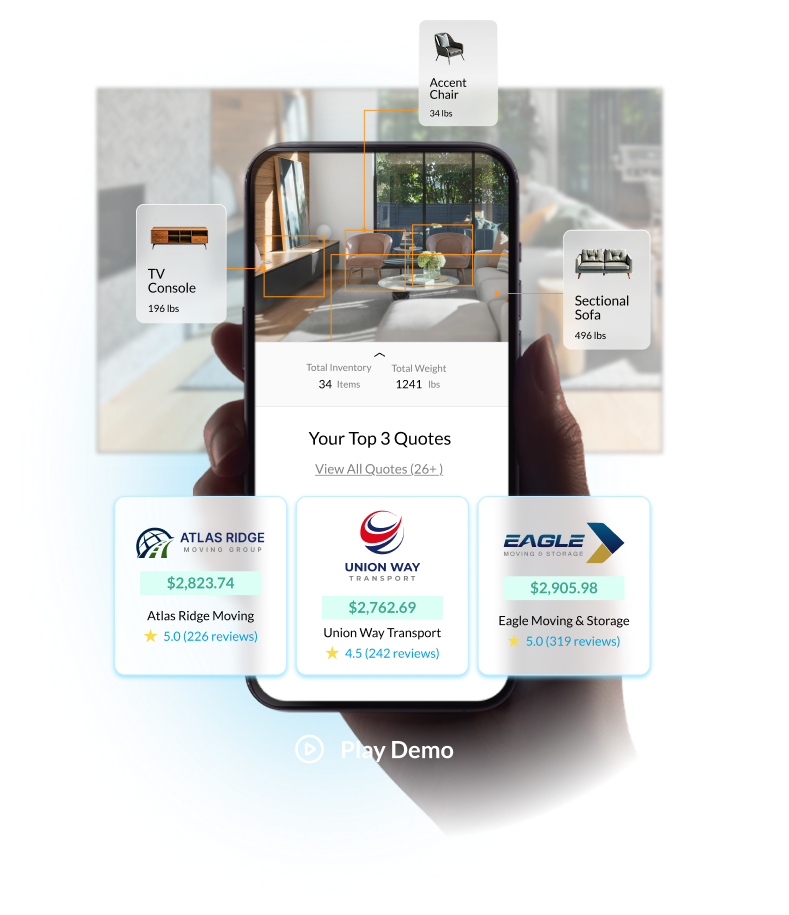
Shop Movers with AI
Get up to 25 moving quotes for your move to Austin, TX in under 3 minutes
Find the cheapest and best movers with Agoyu.
Top Agoyu Movers for Austin, TX
(These are the Movers in Agoyu who have booked the most moves to Austin, TX, have the best rates and received the highest customer ratings in the trailing 12 months)
Mover: All My Sons Moving & Storage
Years in Service: 32
US DOT Profile: https://dot.report/usdot/923537
Mover: Helix Moving & Storage
Years in Service: 15
US DOT Profile: https://dot.report/usdot/2358272
Mover: AirVan North American Van Lines
Years in Service: 90
US DOT Profile: https://dot.report/usdot/70851
Mover: Compass Moving
Years in Service: 43
US DOT Profile: https://dot.report/usdot/1438369
(To view full profile and customer service scores of these and all Agoyu movers visit www.agoyu.com )
CLICK HERE to get exact price quotes from ALL Agoyu Movers.
Key Numbers
- Up to 25 moving quotes in under 3 minutes on an average lane, from published rates plus discount asks
- 86 long distance movers in the platform
- 12 bids on an average posted move, with the winning bid about 23% below published rates on average
- $100,000 of insurance with no deductible included on every household goods move
- Patented AI platform, U.S. Patent No. 12,602,645 B2
Explore Life in Austin, TX
Housing
Typical home value: $497,418
Home-value trend: down 3.7% over the past year
Source: Zillow, August 2026
Median home sale price: $528,657
Sale-price trend: down 0.11% year over year
Median days on market: 73 days
Median price per sq. ft.: $284
Source: Redfin, three months ending October 2026
Typical monthly rent: $1,586
Rent change: down 0.3% year over year
Source: Zillow, August 2026
Homeownership rate: 43.4%
Median gross rent: $1,729
Source: U.S. Census Bureau, 2020-2024 ACS estimates
Agoyu Housing Score for Austin: 68/100 – Good
Austin offers a wide range of housing options for people moving to the area, from downtown condos and older bungalows in South Austin to master planned suburbs in Round Rock, Cedar Park and Pflugerville. The typical home value is about $497,418, well above the U.S. typical value of $364,812 reported by Zillow for the same period, while the median home sale price is approximately $528,657. Home values have eased over the past year after a long run-up, and homes are spending about 73 days on the market, giving buyers more time to compare properties and neighborhoods and more room to negotiate than they had a few years ago.
Renters will find a large rental market, with typical monthly rent around $1,586, below typical rents nationally. Austin’s homeownership rate of 43.4% is low for Texas and reflects how much of the city’s housing stock is rental apartments and condos near the urban core. Housing costs can vary significantly across the Austin area, from premium neighborhoods like Westlake and Tarrytown to more affordable areas such as Del Valle, Manor and Leander, so people moving to Austin should compare neighborhoods based on budget, commute, schools, amenities, and the type of housing they are looking for.
If you are buying or selling a home as part of your move, ask about the ARC Realtor Rebate referral program. A referral through ARC’s real estate network can return part of the agent’s commission to you at closing.
Source Links:
Zillow – Austin Home Values & Rent: https://www.zillow.com/home-values/10221/austin-tx/
Redfin – Austin Housing Market: https://www.redfin.com/city/30818/TX/Austin/housing-market
U.S. Census Bureau – Austin QuickFacts: https://www.census.gov/quickfacts/fact/table/austincitytexas/lnd110210
Cost of Living in Austin, TX
Overall: down 1.9%
below U.S. average
Housing/Rents: up 20.4%
above U.S. average
Goods: down 6.2%
below U.S. average
Other Services: down 3.8%
below U.S. average
Agoyu Cost of Living Score for Austin, TX: 85/100 – Excellent
Austin has a slightly lower overall cost of living than the national average, which surprises many people who only follow its home prices. According to the U.S. Bureau of Economic Analysis, overall prices in the Austin-Round Rock-San Marcos metropolitan area are approximately 1.9% below the U.S. average. Goods are about 6.2% below the national average and other services are about 3.8% below. The exception is housing: rents run about 20.4% above the U.S. average, a sign of how much demand Austin’s growth has put on its rental market, even as sale prices have cooled.
Texas also has no state income tax on wages, which means more of each paycheck stays in your pocket than in most states. Combined with below-average prices overall, Austin can offer an attractive overall cost profile for people considering a move to the area, especially compared with the larger coastal metros. The tradeoff sits in property taxes, covered in the Taxes section below.
Source: U.S. Bureau of Economic Analysis, 2024 Regional Price Parities. U.S. average = 100.
https://www.bea.gov/data/prices-inflation/regional-price-parities-state-and-metro-area
Schools & Education
Largest public school district: Austin Independent School District
Public schools: 123
Students enrolled: 72,272
Student/teacher ratio: 14.0:1
Four-year graduation rate: 90.2%
Nearby colleges & universities: University of Texas at Austin, St. Edward’s University, Huston-Tillotson University, Concordia University Texas, Austin Community College, Texas State University (Round Rock campus) and others.
Agoyu Schools & Education Score: 85/100 – Excellent
Austin offers a wide range of public, private, charter, and higher-education options. Austin Independent School District, the public district for most of the city, serves approximately 72,272 students across 123 schools. Its four-year graduation rate reached 90.2% for the Class of 2024, above the Texas average and above the national public-school average of approximately 87%. Academic performance varies significantly among individual schools across the Austin area, making school location an important consideration for families deciding where to live. Families also look closely at the highly rated suburban districts around the city, including Eanes, Round Rock, Leander and Lake Travis.
Higher education is one of Austin’s real strengths. The University of Texas at Austin is one of the nation’s largest and top-ranked public research universities, and the city is also home to St. Edward’s University, Huston-Tillotson University, Concordia University Texas and Austin Community College, one of the largest community college systems in Texas.
Sources:
NCES – Austin ISD district data: https://nces.ed.gov/ccd/districtsearch/
Texas Education Agency – cohort graduation rates: https://tea.texas.gov/
NCES College Navigator – Colleges and universities: https://nces.ed.gov/collegenavigator/
Crime & Safety in Austin, TX
| Rate (per 100,000 residents) | Austin | U.S. | Difference |
|---|---|---|---|
| Violent crime | 467 | 371 | 26% higher |
| Property crime | 3,242 | 1,835 | 77% higher |
Data year: 2024
Agoyu Crime & Safety Score: 74/100 – Very Good
Austin reported higher rates of both violent and property crime than the national average in 2024, but by much smaller margins than most large Texas metros. Violent crime was approximately 26% above the U.S. rate, while property crime was approximately 77% higher, driven largely by vehicle theft and theft from vehicles. Crime levels can vary significantly across Austin and the surrounding area, so people moving to Austin should also consider neighborhood-level crime and safety information when deciding where to live.
Data note: 2024 is the latest year with complete, comparable FBI crime data available for Austin and the United States.
Sources:
FBI Crime Data Explorer: https://cde.ucr.cjis.gov/LATEST/webapp/
Bureau of Justice Statistics – Crime in the United States 2024: https://bjs.ojp.gov/library/publications/crime-known-law-enforcement-2024
Jobs & Economy in Austin, TX
Unemployment rate: 3.7% vs. 4.0% U.S. average
Median household income: $100,431 vs. $80,734 U.S. average
Average annual wage: approximately $108,524 vs. $86,008 U.S. average
Employment growth: approximately +19.1% over five years vs. +7.7% nationally
Austin’s September 2026 unemployment rate was 3.7%, compared with 4.0% nationally on the comparable BLS non-seasonally-adjusted series. The Austin metro added about 15,100 jobs over the most recent year, an increase of 1.1%, and its five-year employment growth of about 19.1% is the fastest of any large metro in this guide series.
The Austin metro’s median household income was $100,431 in the Census Bureau’s ACS 2020-2024 estimates, well above the national figure of $80,734 on the same basis.
For wages, QCEW reports an average weekly wage of $2,087 in Travis County in Q1 2026, versus $1,654 nationally. Annualized, that’s approximately $108,524 in the Austin area versus $86,008 nationally. Austin’s slightly below-average cost of living means those wages stretch further than the raw comparison suggests.
Top Industries in Austin
Austin has one of the country’s most distinctive metropolitan economies, anchored by technology and state government. Major employment sectors include:
- Professional & Business Services
- Trade, Transportation & Utilities
- Education & Health Services
- Government
- Leisure & Hospitality
- Manufacturing
- Construction
- Financial Activities
- Information
Austin is particularly notable for technology. It is home to Dell Technologies’ headquarters in Round Rock and major operations for Apple, Google, Meta, Amazon, IBM and Oracle, and its semiconductor corridor includes Samsung and NXP. State government is the other anchor: as the Texas capital, Austin hosts the State of Texas and the University of Texas system as two of its largest employers.
Largest Employers in Austin
Major Austin-area employers include the State of Texas, Dell Technologies, the University of Texas at Austin, the City of Austin, H-E-B, Ascension Seton, St. David’s HealthCare, Austin ISD, Apple and Amazon. The State of Texas is the region’s largest employer, and Dell Technologies, headquartered in Round Rock just north of the city, is its largest private technology employer.
Agoyu Jobs & Economy Score: 70/100 – Very Good
How the score breaks down:
Unemployment (30% of the score)
Austin 3.7% vs. 4.0% nationally. Component score 53
5-Year Job Growth (30% of the score)
Austin +19.1% vs. +7.7% nationally. Component score 97
Cost-Adjusted Household Income (20% of the score)
Austin $102,376 vs. $80,734 nationally. Component score 62
Cost-Adjusted Average Wage (20% of the score)
Austin $110,626 vs. $86,008 nationally. Component score 64
Austin has a large and fast-growing economy supported by technology, state government, healthcare, professional services and manufacturing. The region’s unemployment rate is below the national average, and five-year employment growth has far outpaced the country overall. Median household income and average wages are also well above national levels.
Austin’s slightly below-average cost of living adds to that advantage. When adjusted for local prices using the BEA Regional Price Parities, household income and average wages stretch further in Austin than the national figures do.
Sources
BLS – Austin Employment, Unemployment & Wage Data
https://www.bls.gov/regions/southwest/data/employmentandunemploymentandwages_austin_table.htm
BLS – Quarterly Census of Employment and Wages (QCEW)
Census ACS – Austin Metro Income
https://data.census.gov/table/ACSST5Y2024.S1901
BEA – Regional Price Parities
https://www.bea.gov/data/prices-inflation/regional-price-parities-state-and-metro-area
Healthcare in Austin, TX
Major health systems: Ascension Seton, St. David’s HealthCare and Baylor Scott & White Health
Major hospitals and medical centers: Dell Seton Medical Center at the University of Texas, St. David’s Medical Center, Seton Medical Center Austin, St. David’s South Austin Medical Center, St. David’s Round Rock Medical Center and Baylor Scott & White Medical Center – Austin
Major children’s hospital: Dell Children’s Medical Center
Academic medical center: Dell Seton Medical Center at the University of Texas
Major medical schools: Dell Medical School at the University of Texas at Austin
Major teaching and academic hospitals: Dell Seton Medical Center, Dell Children’s Medical Center and St. David’s Medical Center
Healthcare access: approximately 87.9% of Travis County residents had health insurance in recent Census estimates, compared with approximately 91.6% nationally.
Austin offers a strong and still-growing healthcare network. Ascension Seton and St. David’s HealthCare, an HCA Healthcare division, operate the region’s two largest hospital networks, and Baylor Scott & White adds a third system with hospitals in Austin, Round Rock, Lakeway and Pflugerville. Dell Children’s Medical Center is the region’s dedicated children’s hospital and a Level I pediatric trauma center.
Academic medicine is Austin’s newest strength. Dell Medical School at the University of Texas at Austin, which welcomed its first class in 2016, is the first medical school built at a top research university in decades, and Dell Seton Medical Center serves as its teaching hospital across from the school in the downtown medical district. Healthcare access, measured by insurance coverage, remains below the national average, because Texas has one of the highest uninsured rates in the country and Travis County’s coverage rate sits a few points under the U.S. rate.
Agoyu Healthcare Score: 73/100 – Very Good
Austin scores well for hospital availability, major medical centers and pediatric care, and its academic medicine is rising fast with Dell Medical School. Its access score is held down by Texas’s high uninsured rate.
The Agoyu Healthcare Score compares healthcare resources and access in each destination with national benchmarks. It is calculated on a 0-100 scale from six factors:
How the score works (100 points total):
- Physicians per capita: 25 points. Doctors per 100,000 residents vs. the national average. Higher is better.
- Hospital availability: 20 points. Hospital beds per 100,000 residents vs. the national average. Higher is better.
- Healthcare access: 20 points. Share of residents with health insurance vs. the national average. Higher is better.
- Major medical centers: 15 points. Availability of major tertiary and specialty medical centers in the metro area.
- Children’s healthcare: 10 points. Access to a dedicated children’s hospital and pediatric specialty care.
- Academic / teaching medicine: 10 points. Presence of teaching hospitals, medical schools and academic medical centers.
Each factor is scored 0-100 against its national benchmark, then weighted to produce the final score.
Factor data sources: HRSA Area Health Resources Files; Centers for Medicare & Medicaid Services (CMS); U.S. Census Bureau American Community Survey; NCES.
What the scores mean:
· 85-100 Excellent
· 70-84 Very Good
· 55-69 Good
· 40-54 Fair
· Below 40 Weak
Data Sources
HRSA Area Health Resources Files
https://data.hrsa.gov/topics/health-workforce/ahrf
CMS Care Compare
https://www.medicare.gov/care-compare
U.S. Census Bureau
Ascension Texas
https://healthcare.ascension.org
St. David’s HealthCare
Getting Around Austin, TX
Average commute: 23.7 minutes vs. 26.6 minutes nationally
Driving alone: 56.0%
Public transit: 2.0%
Work from home: 30.7%
Major airport: Austin-Bergstrom International Airport (AUS)
Distance from downtown: Approximately 5 miles
Secondary airport: None with scheduled commercial service; San Marcos Regional Airport serves general aviation about 30 miles south
Austin is largely a car-oriented city, although its average commute is shorter than the national average. About three in ten Austin workers work from home, one of the highest shares of any large U.S. city, reflecting the city’s technology and professional workforce. Public transportation accounts for a small share of commuting, but CapMetro operates bus service across the city, the MetroRail Red Line commuter train to Leander, and the Project Connect light rail program is in development.
Austin’s air connectivity keeps improving. Austin-Bergstrom International Airport, about five miles southeast of downtown, has grown into one of the busiest medium-hub airports in the country and offers extensive nonstop domestic service and a growing list of international routes.
Data Sources: U.S. Census Bureau American Community Survey (ACS) 2020-2024 5-year estimates and QuickFacts, Austin-Bergstrom International Airport and CapMetro. Commute mode shares are ACS 2020-2024 5-year estimates for the city of Austin.
https://data.census.gov/table/ACSST1Y2024.S0801
https://www.austintexas.gov/airport
Weather & Climate in Austin, TX
Winter: 64°F / 44°F
Spring: 80°F / 59°F
Summer: 96°F / 74°F
Fall: 82°F / 60°F
Annual rainfall: 36.3 inches
Annual snowfall: 0.2 inches
Days below freezing: Approximately 12 nights per year
Days above 90°F: Approximately 123 days per year
Natural hazards: Extreme heat, flash flooding, severe thunderstorms, tornadoes and occasional winter ice storms.
Austin has a humid subtropical climate with long, hot summers and mild winters. Temperatures reach 90°F on approximately 123 days per year, one of the highest counts of any large U.S. city, while freezing temperatures occur on only about 12 nights and snow is rare. Austin receives about 36 inches of rain annually, much of it in heavy spring and fall downpours.
Flash flooding is Austin’s most serious weather hazard. The city sits at the edge of the Texas Hill Country in the corridor Texans call Flash Flood Alley, where intense rain on rocky ground can flood creeks and low-water crossings within hours. Severe thunderstorms and occasional tornadoes are the other major risks, and rare winter ice storms, most famously in February 2021, can shut the region down. NOAA’s 1991-2020 Climate Normals are used to represent typical long-term weather conditions.
Agoyu Weather & Climate Score: 55/100 – Good
The Agoyu Weather & Climate Score considers both day-to-day climate comfort and exposure to extreme weather and natural hazards.
How the score breaks down:
Temperature comfort (25% of the score): 55
Extreme heat (20% of the score): 25
Winter severity (15% of the score): 90
Precipitation / severe weather (15% of the score): 55
Natural-hazard exposure (20% of the score): 55
Year-round outdoor climate (5% of the score): 60
Overall: 55/100
Austin benefits from mild, short winters, abundant sunshine and a long outdoor season from fall through spring. Relentless summer heat, with more than four months of 90-degree days, and real flash flood exposure keep its climate score from rising higher.
Data Sources
NOAA National Centers for Environmental Information (NCEI) – 1991-2020 U.S. Climate Normals, Austin-Camp Mabry station
https://www.ncei.noaa.gov/cdo-web/datatools/normals
National Weather Service – Austin / San Antonio Climate
Taxes in Austin, TX
State individual income tax: None
Tax structure: Texas does not tax wages, salary or any other personal income. The state constitution makes an income tax very difficult to introduce.
Top marginal state income tax rate: None
Texas effective property tax rate: Approximately 1.40% of owner-occupied housing value
State sales tax: 6.25%
Austin combined sales tax: 8.25%
Estate tax: None at the state level
Inheritance tax: None at the state level
The absence of a state income tax is one of Austin’s biggest financial draws. Texas has never taxed personal income of any kind. The tradeoff is property tax. Texas relies heavily on property taxes to fund schools and local services: its effective property tax rate of about 1.40% is among the highest in the country, and a new buyer’s actual bill depends on the combined rates of the county, city, school district and other taxing units at the specific address. Sales tax sits in the middle: Texas’s 6.25% state rate plus local taxes bring Austin’s combined rate to 8.25%.
Agoyu Tax Score: 72/100 – Very Good
The Agoyu Tax Score considers the taxes most likely to affect a household moving to a new city.
- Individual income tax: 100 (35% of the score). Texas taxes no personal income of any kind. No income tax is the best possible result on this factor.
- Property tax: 45 (30% of the score). Effective property tax rate vs. the national benchmark. Lower is better. Texas’s rate is among the highest in the country, which is the main drag on Austin’s tax score.
- State + local sales tax: 50 (20% of the score). Combined state and local rate vs. the national benchmark. Lower is better. Austin’s 8.25% is on the higher side.
- Estate / inheritance tax: 100 (10% of the score). Whether the state imposes an estate or inheritance tax. Texas imposes neither.
- Overall household tax burden: 70 (5% of the score). A broader comparison of state and local taxes affecting households. Texas’s overall burden is below the national average despite its property taxes, because there is no income tax.
Overall: 72/100
Scoring Methodology
Individual Income Tax: 35%
Compares the destination’s individual income-tax structure and rates with other U.S. states. Lower is better. Texas scores the maximum because it imposes no income tax on wages, salary or any other personal income.
Property Tax: 30%
Compares effective property-tax rates with the national benchmark. Lower is better. Texas scores poorly here because its effective rate is among the highest in the country.
Sales Tax: 20%
Compares the combined state and local sales-tax rate with the national benchmark. Lower is better. Austin’s combined rate of 8.25% is on the higher side.
Estate & Inheritance Taxes: 10%
Measures whether the state imposes an estate or inheritance tax. Texas imposes neither.
Overall Household Tax Burden: 5%
Provides a broader comparison of state and local taxes affecting households. Texas’s overall state and local tax burden is below the national average.
What the scores mean:
· 85-100 Excellent
· 70-84 Very Good
· 55-69 Good
· 40-54 Fair
· Below 40 Weak
Austin benefits from the most valuable tax feature a state can offer a relocating household: no income tax at all. The tradeoff is some of the highest property taxes in the country, which homeowners feel every year and renters feel through rent. For most households moving from a state that taxes income, Texas’s structure still scores well.
Primary Data Sources
Tax Foundation – Texas Taxes
https://taxfoundation.org/location/texas
Texas Comptroller – Tax Rates
Disclaimer: Agoyu does not provide tax or legal advice. Tax rates and laws can change and individual circumstances vary. Consult a qualified tax professional or CPA to verify tax information and understand how it may apply to your situation.
Lifestyle in Austin, TX
Moving to Austin is about more than housing costs, commute times and taxes. It is about what life looks like when the workday ends. Austin is the Live Music Capital of the World, a fast-growing Texas city where music venues, food trucks, spring-fed pools and tech campuses share the same map. Here is a quick look at what helps define life in Austin.
Restaurants & Dining
Austin’s food identity starts with barbecue and breakfast tacos. Franklin Barbecue is the famous name, with lines that start before dawn, and the city has a deep bench of smoked-meat institutions alongside it. Tex-Mex and Mexican food run through every neighborhood, the food truck scene is a permanent part of the landscape, and chef-driven restaurants fill South Lamar, East Austin and downtown. Torchy’s Tacos and Tacodeli started here, and the city’s trailer parks and truck courts make eating out cheap and casual as easily as upscale.
Professional Sports
Austin’s professional sports scene is young and growing. Austin FC plays at Q2 Stadium and has drawn some of the most passionate crowds in Major League Soccer since joining the league in 2021. The Texas Longhorns are the city’s traditional team, filling Darrell K Royal-Texas Memorial Stadium on fall Saturdays. The Circuit of the Americas hosts Formula 1’s U.S. Grand Prix and MotoGP each year, the Austin Spurs and Austin Gamblers add minor league basketball and professional bull riding, and the Round Rock Express bring Triple-A baseball just north of the city.
Outdoor Recreation
Outdoor life is Austin’s signature. Barton Springs Pool, a three-acre spring-fed pool in Zilker Park that stays near 68 degrees year-round, is the city’s living room. Lady Bird Lake runs through downtown with a hike-and-bike trail around it and kayaks and paddleboards on it. The Barton Creek Greenbelt offers miles of trails and swimming holes inside the city, Mount Bonnell overlooks Lake Austin, and Lake Travis and the Texas Hill Country begin about a half hour west, with state parks, wineries and swimming holes beyond.
Arts & Culture
Music is the culture here. Austin City Limits, the longest-running music series on American television, tapes at the Moody Theater, and South by Southwest and the Austin City Limits Music Festival anchor the calendar. Hundreds of venues, from the Continental Club and Stubb’s to Antone’s and the Broken Spoke, keep live music playing every night. The Blanton Museum of Art at UT Austin, the Contemporary Austin and the Mexic-Arte Museum cover the visual arts, and the Paramount Theatre has hosted film, comedy and music downtown since 1915.
Nightlife
Sixth Street is the famous strip, a run of bars and live music venues in the middle of downtown, with the quieter warehouse district and West Sixth nearby. Rainey Street, a former residential street of bungalow bars and food trucks near Lady Bird Lake, is the other big district, though towers are reshaping it. Locals spread wider: East Sixth and East Cesar Chavez for neighborhood bars and breweries, South Lamar for cocktail spots, and the Domain in North Austin for an upscale suburban night out.
Parks & Green Space
Zilker Park, 351 acres just south of downtown, is Austin’s front lawn, home to Barton Springs, the Zilker Zephyr train and the ACL Festival. Beyond it, the city runs an extensive park system: the Ann and Roy Butler Hike-and-Bike Trail circles Lady Bird Lake for ten miles, the Barton Creek Greenbelt cuts through the southwest of the city, and neighborhood parks, pools and splash pads are spread across every district. The Congress Avenue Bridge hosts the largest urban bat colony in North America, about 1.5 million Mexican free-tailed bats that pour out at sunset from spring through fall.
Major Attractions
The Texas State Capitol is the obvious Austin original, a pink granite landmark taller than the U.S. Capitol. Other major attractions include the Bullock Texas State History Museum, the LBJ Presidential Library at UT Austin, the Cathedral of Junk and the year-round calendar of festivals, from SXSW in March to ACL in October and the F1 weekend at Circuit of the Americas. Austin’s biggest strength, however, may be its balance: a major tech and government city that still protects its swimming holes, food trucks and weird streak.
Lifestyle Sources
Visit Austin
Austin Parks and Recreation
https://www.austintexas.gov/department/parks-and-recreation
Barton Springs Pool
https://www.austintexas.gov/department/barton-springs-pool
Frequently Asked Questions About Moving to Austin
How much does it cost to move to Austin?
The cost of moving to Austin can vary dramatically depending on your move. The two biggest factors are:
- How much you have to move
- How far you are moving
A one-bedroom apartment moving 300 miles to Austin is obviously a very different move than a four-bedroom house moving 2,000 miles.
Your actual cost can be significantly higher or lower than any general range, depending on your inventory, distance, move date, packing requirements and other services.
That is why the best, fastest and most accurate way to find out what your move to Austin will actually cost is to price your specific move.
Agoyu makes that possible online.
Use Agoyu’s free AI scanning tool to scan the rooms in your home with your phone. Agoyu’s vision AI identifies the furniture, boxes and other household goods you actually need to move and creates a detailed moving inventory.
Instead of giving you a generic moving-cost calculator based on assumptions, Agoyu sends your actual move to qualified participating movers.
That means you can see what movers are actually willing to charge for your move to Austin, and compare real prices for your exact move instead of guessing from an average.
Can I get an exact moving quote to Austin online?
Yes. Agoyu was built to solve one of the biggest problems with getting a moving quote online: the mover needs to know exactly what you are moving before they can give you an accurate price.
Instead of guessing how many boxes you have or trying to describe every piece of furniture over the phone, Agoyu uses vision AI to build your moving inventory. Simply use your phone to scan the rooms in your home. Agoyu identifies items such as sofas, tables, chairs, beds, boxes and other belongings while distinguishing them from permanent fixtures like doors, windows and countertops.
That detailed inventory is then provided to participating movers so everyone is pricing the same move to Austin.
Agoyu also requires participating movers to provide binding or bound/not-to-exceed pricing. You aren’t comparing vague estimates that could look completely different when the final bill arrives.
Think of Agoyu like Expedia for moving. Build your move once, let qualified movers price it, compare your options and choose the mover you want, all in one place. Every move booked through Agoyu includes full insurance with no deductible up to $100,000, and the platform is built on Agoyu’s patented technology (U.S. Patent No. 12,602,645 B2).
What is the best time of year to move to Austin?
There isn’t one perfect month to move to Austin. The best time depends on whether your priority is price, weather, housing availability, school schedules or mover availability.
Peak moving season runs June through August. Higher demand can mean less available truck capacity and higher prices, and Austin summers are extremely hot, which makes moving day harder work and can be rough on heat-sensitive belongings.
Spring and fall offer Austin’s most comfortable weather, although spring is also severe storm and flash flood season in Central Texas. Winter is mild and may provide more mover availability and better pricing. Families with school-age children may still prefer summer because it avoids changing schools during the academic year.
The good news is that you don’t have to guess. Build your move on Agoyu and let participating movers compete for it. If your dates are flexible, you can also compare different move dates to see if you can find better pricing.
How far in advance should I book my move to Austin?
For most moves to Austin, starting 4 to 8 weeks in advance is a good rule of thumb. During peak moving season, starting even earlier can give you more options.
Moving is largely a capacity business. Movers only have so many trucks, drivers and crews available. As a particular date fills up, your choices can shrink and prices can increase.
Agoyu puts your actual move in front of participating movers. Your inventory, dates, origin, destination and requested services are already defined, so movers can quickly determine whether your shipment fits their available capacity and what they are willing to charge for it.
Starting early gives more movers an opportunity to compete for your move. If the initial prices are higher than you expected, you also have time to adjust your dates or reduce the amount you are moving.
How can I compare moving quotes from different Austin movers?
Comparing moving quotes can be difficult because two movers may not actually be quoting the same move.
One mover may estimate 6,000 pounds while another estimates 8,000. One may include packing while another doesn’t. One price may be binding while another is only an estimate. A cheap moving quote isn’t much of a bargain if the final price changes significantly.
Agoyu was built to fix this problem.
Agoyu’s vision AI creates a detailed inventory of what you are actually moving. Participating movers review that inventory, so everyone is pricing the same shipment.
Agoyu also requires participating movers to provide binding or bound/not-to-exceed pricing.
Then you can compare the movers themselves using the Trust Signals Agoyu displays on each mover’s profile: a link to the mover’s US DOT license record, its BBB rating, its Yelp reviews, and its IAM and FIDI profiles where the mover holds them.
Instead of trying to compare completely different moving estimates, Agoyu gives you a much better apples-to-apples comparison of price, service and mover quality.
How can I get the best price from a mover to Austin?
Here’s something most people don’t realize about moving. Price is heavily influenced by capacity.
A mover may already have a truck headed toward Austin with available space. Your shipment might fit perfectly into that truck’s route and schedule. In that situation, the mover has a good reason to offer a more competitive price to win your business.
That’s where Agoyu’s marketplace can really help.
You build your move once using Agoyu’s AI inventory technology. Participating movers can see what you are moving, where it is going, when you want to move and what services you need.
They can then compare your move with their available capacity and compete for your business.
Think of an empty seat on an airplane. Once the plane takes off, the airline can’t sell that seat. Available space on a moving truck can work in a similar way. If the truck is already headed toward Austin, filling that extra space can be very attractive to the mover.
Agoyu gives qualified movers the opportunity to compete for your move while still requiring binding or bound/not-to-exceed pricing. That can help you find a great price without giving up price protection.
Are moving quotes to Austin binding?
Not always, and this is something you should pay close attention to when comparing movers.
A non-binding estimate is just that, an estimate. For interstate moves, the final price can be based on the actual shipment weight, services performed and the mover’s applicable tariff.
Agoyu takes a different approach.
Agoyu requires participating movers to provide binding or bound/not-to-exceed pricing.
Agoyu’s vision AI also helps address one of the biggest causes of pricing problems by creating a detailed inventory of what you are actually moving. You scan your home, Agoyu identifies the items being moved, and the mover reviews that inventory before providing a price.
If you later add furniture, boxes or services that weren’t included in the original move, the price may need to change. But if you’re moving what you said you were moving and using the services included in the quote, binding pricing gives you much greater price certainty.
Agoyu was designed to take the guesswork out of the process. Know what’s being moved. Know who’s moving it. Know the price before you book.
How do I know if a mover to Austin is legitimate?
A low moving quote doesn’t mean much if you don’t trust the company providing it.
For an interstate move, you should confirm that the mover is properly registered with the Federal Motor Carrier Safety Administration. You should also look at the company’s operating history, safety information, customer reviews and industry credentials.
Agoyu displays the records that let you do that homework yourself, on the same screen as the price. Every mover profile shows Trust Signals: a link to the mover’s US DOT license, its BBB rating, its Yelp reviews, and, where the mover holds them, its IAM and FIDI profiles. Check them before you book, and read reviews for patterns rather than single stories.
The goal isn’t simply to find the cheapest mover to Austin. It’s to get qualified movers competing for your business so you can compare price and record at the same time.
Is it cheaper to move to Austin during the week?
Sometimes, but the bigger factor is whether a mover has capacity on the date you need.
Weekends, the beginning and end of the month, and summer dates can be popular moving periods. When trucks and crews are already heavily booked, movers have less reason to offer aggressive pricing.
A Tuesday in the middle of the month might fit perfectly into one mover’s schedule while making no difference to another.
That’s another advantage of Agoyu.
Instead of trying to figure out which mover needs your shipment on which day, build your move and let the movers figure it out. Participating movers can evaluate your dates, shipment and route against their actual capacity and price your move accordingly.
If your schedule is flexible, shifting your pickup date by even a few days may give movers more opportunities to fit your shipment into their network and offer you a better price.


