Bill Mulholland is the owner of ARC Relocation, a company that relocates thousands of employees annually, to every state in the United States, and more than 90 foreign countries, for organizations like DHL, Overstock.com, GNC, and the U.S. Government. Bill owns a real estate brokerage servicing Maryland, Virgina and Washington DC as well as a title company servicing Maryland, Virginia, Washington DC and Florida
As a veteran, you deserve to have your move be as cost-efficient and easy as possible. Many moving companies offer discounts to veterans and active duty military members.
To help you narrow down which moving companies for veterans and active duty military members are the best, we made a list of the four best moving services for veterans.
North American Moving Services is the best full-service moving company for veterans. Whether you need cross country movers or you are moving to a closer state, North American Moving Services will take care of you. This moving company provides industry-standard full-service moves, including transportation, packing, unpacking, loading, unloading, and unpacking services.
Their website offers various online resources, such as creating a moving checklist and relocation guides. They offer generous military discounts on moving, storage, packing services, protection plans, and tariff rates.
Members of the American Legion are eligible for exclusive savings and receive up to $100,000 in replacement coverage at no cost should your items become lost or damaged. North American Moving Services also has an easy and accessible claims process in case something goes wrong during your move.
PODS offers the best moving containers for veterans. Whether you are a veteran or on active duty, PODS will give you a ten percent discount on your local move.
This discount will be applied after delivery fees and storage fees are factored into your total. A benefit of using PODS compared to other container moving services is that your veteran discount is also applied to storage.
When using PODS, they deliver a cargo container to your location. You pack it yourself, and PODS transports it to your new home, or it can be stored at a secure PODS warehouse.
If packing yourself sounds challenging due to your age, you can consider using a senior moving service to help with your move.
A veteran discount for long-distance moves only applies to your first month’s storage, transportation, and initial delivery fees.
Pros
Transparent pricing online
Convenient
On-site storage
Cons
Not available in all 50 US states
Need Movers? Your Move, Your Choice
Instant Exact Cost for Your Specific Move
Agoyu’s AI technology give you quick, precise estimates. Scan your
room, receive instant quotes from multiple movers, and confidently
select the best option for you.
STEP 1 OF 3
1
Enter Move Details
STEP 2 OF 3
2
Select services
**Please note you may check more than one service
or Have a Top Mover Call Me Now!
Do it the old fashion way! A top mover will call you to provide an
instant quote over the phone or at your house!
Budget is the best military truck rental because they offer incredible discounts for military moves, but unfortunately, it is only geared towards active duty personnel. The budget truck rental military discount does not apply to fees, taxes, damage waivers, or other additional costs.
If you are active duty personnel, you can receive a 20 percent discount on your truck rental any day of the week. It is difficult to find any company that offers that high of a discount, so it is essential to recognize Budget for their effort with active duty military members.
They offer multiple truck sizes to accommodate your move best. Whether a local or long-distance move, Budget offers low-cost moves and easy online reservations.
Pros
High discount rate for active duty personnel
Easy to make online reservations
Offers one-way moves
Affordable
Cons
A $150 Deposit required to schedule your move
No discounts for veterans, only active duty military
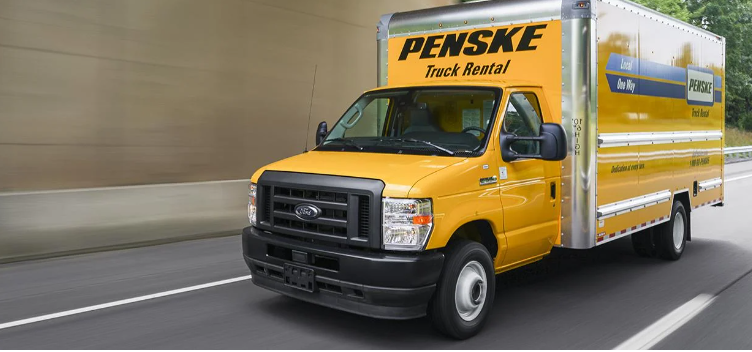
Penske deserves an honorable mention as a moving company for veterans. Whether you are a veteran, a reservist, or active duty, Penske will take ten percent off your military discount moving truck rental, accessories, or towing equipment. You need to provide proof of your veteran or military status when you get your moving truck to receive your discount.
Any taxes, fees, or protection plans are added to your total price after applying the discount. Penske is a highly military-friendly company that both employs and supports veterans.
They partner with Support Military Families to collect care packages and deliver them to military families. They have a specific call center for veterans and active duty members, so you don’t have to worry about finding the department that handles military moves. Penske also offers nationwide availability, and it is easy to make online reservations.
Pros
Available nationwide
Supports and employs veterans
Unlimited miles for one-way moves
Separate call center for veterans and active duty personnel
Cons
There is a fee per mile on local moves
Refundable security deposit to schedule move
Frequently Asked Questions
Do most movers offer military discounts?
Many moving and storage companies offer military discounts to veterans and active duty members. When planning a move through a moving company, it can be beneficial to ask about their veteran discounts to help you save money on your move.
Is moving yourself or hiring movers better?
Moving by yourself versus hiring movers depends mainly on your budget and how much time you need to move. Moving yourself can be strenuous, especially if you don’t have help from friends or family.
Hiring movers that offer military discounts on moving trucks will cost more, but it is much easier for you. Movers can help you pack, load, unload, and unpack for your move.
What size moving truck do I need?
The size moving truck you need depends on the size of your move for your veteran moving services. If you are moving two to three rooms, a 16-foot moving truck should work well.
Many moving companies for military truck rentals usually range in size from 12 feet to 26 feet. Using a moving app can help you determine what size moving truck you need based on the size of your move.
Final Thoughts
Many moving companies for veterans offer special discounts, so it is essential always to ask if discounts are provided before scheduling a move. If you are planning a move and need help finding a moving company, using the Agoyu app can help.
The Agoyu app can help you find the cheapest moving companies with the biggest discounts. Agyou can help you compare reviews and prices of the best military moving companies today.
Whether moving locally within Anchorage or long-distance, it is important to find a reliable moving company that will address all of your needs. If you need help with packing, unpacking, vehicle shipping, or storage services, you need a moving company that offers services to help make your move less stressful.
Here are 5 of the best moving companies in Anchorage, Alaska, dedicated to meeting your needs throughout your move.
International Van Lines is an established moving company in Anchorage. International Van Lines offers packing services, auto transport, custom crating, storage services, insurance coverage, and more. International Van Lines offers competitive shipping rates, is a reliable broker and carrier, and has a solid reputation for fast and efficient service.
Transportation Worldwide, which was established in 1987, has over 30 years of experience when it comes to international moves. This makes them one of the best moving companies to Anchorage. You can trust that this company will offer you the best pricing possible and safely move your household goods to Alaska Transportation Worldwide will plan your move, pack your belongings, arrange for customs clearance, and provide real-time shipment tracking.
Agoyu’s AI technology give you quick, precise estimates. Scan your
room, receive instant quotes from multiple movers, and confidently
select the best option for you.
STEP 1 OF 3
1
Enter Move Details
STEP 2 OF 3
2
Select services
**Please note you may check more than one service
or Have a Top Mover Call Me Now!
Do it the old fashion way! A top mover will call you to provide an
instant quote over the phone or at your house!
3. Alisons Relocations
Agoyu Pro Rating 4.8 / 5
Company Description
Alisons Relocations, established in 1998, is an excellent choice for a moving company in Anchorage, Alaska. Alisons Relocations offers residential moving services and long-distance and international moves.
Upon your request, this moving company can help you pack your household goods, pad and wrap all furniture, and load and secure your goods for transportation. With Alisons Relocations, you can trust that your move will run smoothly.
Montway Auto Transport is the best moving company for vehicle shipping. The company offers several methods for vehicle shipping, including enclosed and open carriers, terminal-to-terminal shipping, cross-country shipping, and door-to-door shipping. Montway is an affordable way to ship your vehicle during your move, but you can expedite the process for an additional fee.
Dewitt Move Worldwide is a member of the DeWitt Companies family and operates in more than 100 countries. You can trust that Dewitt will help plan your move in Anchorage and seamlessly coordinate with local agents to offer the best services.
Contact Details
9089 Clairemont Mesa Blvd #301,
San Diego, CA 92123
877-857-9870
Our Review Methodology
For these 5 best moving companies in Anchorage, we carefully analyzed specific factors such as response time, online quotes, services offered, and pricing. Considering these factors, we ranked each moving company with a pro rating between 1 and 5.
Rating: To determine our rating for these moving companies in Anchorage, we read through all Google reviews of each company. Companies with higher reviews and more convenience received a higher rating. All companies were carefully reviewed and chosen by 20+ year veterans of the professional relocation industry.
Response Time: Moving companies that responded quickly to our inquiries received higher ratings than those that did not. Our benchmark for response was within 60 minutes of completing the quote form.
Online Quotes: When getting a free online quote for each of these moving companies in Anchorage, we gave a higher rating to the companies that determined our quote the quickest and the companies that provided online quotes.
Variety of Services: We gave a higher rating to the moving companies that offered various services such as packing, move management, employee relocation, car shipping, and storage.
Pricing: Lastly, the pricing was a huge factor in determining our rating. Fair pricing based on season, company history, and services offered were factored into the overall rating.
When it comes time to move your beloved pool table to a new home, you’ll want to trust only the most experienced professionals. A good pool table moving company knows all the tricks of the trade to safely transport your table without any scratches, dings, or damage. They’ll have high-quality equipment, a trained crew, and plenty of expertise under their belt.
To help you find the best pool table movers, we’ve reviewed the top companies that specialize in moving pool tables. Read on for our reviews of the six best companies that move pool tables.
Over 25 years specializing in moving heavy furniture
Highly trained uniformed crew members
Use foam-lined rails to prevent slate scratching
Exclusive lift gates protect parts in transit
Available nationwide
Cons
Smaller customer base than largest van lines
When it comes to moving heavy furniture and valuables, American Van Lines tops our list as the best overall national moving company. Their trained crews have specially designed equipment for specialty services to safely move everything from antique furniture to heavy safes without any issues.
For pool table transportation, their experienced staff takes careful precautions to fully disassemble your table, wrap the slate and rails with protective blankets, and use exclusive lift gates to ensure no parts touch the truck floor during transit. With an extensive network of locations nationwide, they make moving your pool table to any state simple and hassle-free.
With their impeccable reputation, state-of-the-art equipment, and obsessive attention to detail, American Van Lines stands atop the industry for delicately transporting prized pool tables across any distance.
For pool table moves in Ohio, Northern Kentucky, and Southeast Indiana, Cincinnati Billiards Services offers an affordable solution for safely relocating your table. As a local company focused specifically on pool tables for over 15 years, they have specialized equipment and expert staff to move tables of any style with ease.
As the top local Cincinnati pool table mover, Cincinnati Billiards Services invests in top-quality gear designed specifically for safely transporting slate pieces, rails, legs, and accessories.
Their hydraulic lift gate truck allows easy access without heavy lifting that could lead to injuries or accidents. Available nights and weekends with special hourly rates, their upfront pricing ensures no surprise fees either.
With specialized equipment and staff combined with transparent upfront pricing, rely on their years of experience for your upcoming move.
From coast to coast, International Van Lines is one of the most reputable moving companies when you need to relocate your pool table. As an Atlas Van Lines agent with over 500 positive reviews, they offer the resources of a national company combined with the personal touch of a family-owned moving broker.
As an esteemed Atlas agent with decades in the moving business spanning generations, International Van Lines leverages substantial resources to expertly move heavy specialty items like pool tables.
For personalized service from a steadfast company equipped for safely moving your most prized possessions, trust International Van Lines’ outstanding reputation and expertise. Their renowned crews delicately move everything from grand pianos to hot tubs using state-of-the-art methods so your cherished pool table arrives in flawless condition.
Southern Billiards lives up to their name as the south’s premium billiards service focused exclusively on installing, moving, and servicing pool tables across Texas and Oklahoma. With over 25 years specializing in billiards, their extensively trained professionals have the know-how to safely relocate tables of every type without any nicks or scratches.
As one of the best companies who moves pool tables in Texas’ pool table industry, Southern Billiards thoroughly trains each employee on the intricate process of properly disassembling, loading, securing, and reinstalling pool tables.
Their customized trucks utilize specialty bars, pads, and supports explicitly built to stabilize pieces in transit without any sway or damage. For owners seeking seasoned professionals combining robust billiards knowledge with modern moving methods, Southern Billiards delivers incredible service every time.
Trust only Southern Billiards’ expertise honed from years of experience delivering utterly elegant moves.
Agoyu’s AI technology give you quick, precise estimates. Scan your
room, receive instant quotes from multiple movers, and confidently
select the best option for you.
STEP 1 OF 3
1
Enter Move Details
STEP 2 OF 3
2
Select services
**Please note you may check more than one service
or Have a Top Mover Call Me Now!
Do it the old fashion way! A top mover will call you to provide an
instant quote over the phone or at your house!
Cons
Peak season dates fill up quickly
As one of the largest van line networks in America, Allied Van Lines leverages their extensive resources to provide seamless moves across town or between states. Their professional movers routinely receive glowing recommendations and 5-star ratings for expertly moving valuable specialty items like pool tables.
With each agent-owned Allied franchise specializing in local moves for over 60 years collectively, Allied delivers exceptional regional knowledge combined with renowned national resources. For moving prized pool tables, they utilize thick foam cushions and padding to guarantee the slate, rails, and legs remain pristinely preserved.
Their comprehensively insured crews even offer full packing services using custom crates to prevent shifting or scraping. For specialized local moving capabilities enhanced by renowned global resources and peak professionalism, engage Allied for your upcoming pool table transport and bask in the ease of a smooth, exquisite move.
Goes above and beyond to deliver excellent service
Transparent pricing
Cons
Serves only the Southern California Region
Expert Pool Table Moving and Recovery is a professional pool table moving service located in Southern California, serving San Bernadino, Riverside, Orange, San Diego, Los Angeles, Ventura, and Santa Barbara counties.
They offer flexible scheduling, working around customers’ availability to coordinate convenient pool table pick-up and delivery. As a local moving company specializing in pool tables, they have several advantages that make them stand out.
There are many benefits to using Expert Pool Table Moving and Recovery. First and foremost, their technicians are highly-trained and skilled in properly disassembling, moving, and reinstalling pool tables without damage.
They take great care to fully protect tables with blankets and straps throughout the moving process. Additionally, their upfront pricing is transparent and cost-effective, with no hidden fees.
The only potential disadvantage to note is that Expert Pool Table Moving and Recovery exclusively serves customers located in Southern California at this time. So they may not be an option for pool table owners outside of the SoCal region.
Pool Table Moving Company: FAQs
How should I prepare for my pool table to be moved?
Properly preparing your pool table makes for a smoother moving process by following packing and moving tips can help make the process easier. Remove all accessories from the table top like cues, cue holders, bridges, balls, and racks.
Disassemble any lamps as well to prevent breakage. Clear a wide path to all doorways and ensure at least one three foot-wide doorway for exit. Check for low ceilings, hanging lights, or narrow halls that may need to be bypassed on the route.
Do they reassemble the pool table at my new home?
Yes, reputable pool table moving companies always handle complete reassembly and re-leveling your table at your new residence.
Their trained technicians carefully build back each element using necessary tools and measuring equipment to return your table flawlessly.
Will my warranty still apply after the move?
Manufacturers generally honor warranties after professional relocation since all assembly and infrastructure remains intact under a trained mover’s diligent care, assuming no direct damage occurs in transit.
Reputable movers also carry insurance and offer repair guarantees for any flaws caused during transportation due to mistakes on their end. When moving items such as a pool table, fine artwork, or if you are moving a piano, you should always opt for insurance for your move in case of damage.
Do they also service pool tables or just move them?
Many pool table moving companies also offer related services like deploying new felt, arranging part replacements, or general cleaning and maintenance.
Discuss their full suite of offerings to understand how they can meet all your pool table servicing needs before, during, or after the relocation process.
Final Thoughts
When dealing with specialty furniture like prized pool tables that necessitate delicate care, never settle for inexperienced movers.
Our top recommended pool table moving companies employ extensively trained crews utilizing high-end equipment explicitly designed to safely transport slate pieces, rails, legs, and other elements across any distance without a nick of damage.
Chances are if you’re relocating you’ll want to hire residential moving services to help you with the move. The problem is, there are so many companies to choose from and they’re certainly not all equal.
In this guide, we want to explain the advantages of using a tool like Agoyu to help you find only the best and most qualified household movers in your area.
5 Steps of Home Moving
The residential moving company that you choose is responsible for a lot of your moving needs, such as providing you with cost estimation and explaining your moving service options. Your moving company does more than just loading, unloading, and driving a moving truck. They do more than you might realize to ensure your belongings safely make it from start to finish.
1. Prepare
Your professional movers will explain their residential moving services to you so you have a good understanding of how the process works. Your movers will provide you with a cost estimate and then will take note of everything in your home. This will allow them to inform you ahead of time if there are any items they cannot move and let you know if any of your items have special requirements.
2. Take Inventory
Your residential moving driver will have a comprehensive Inventory and Condition Report of all the items you are moving. Your professional movers will mark down if any items that are being moved have any damage, to provide proof that they did not cause the damage. When your movers are preparing inventory, you should accompany them so you can voice any concerns you might have regarding the handling of your furniture and belongings.
Using a moving app for moving furniture like Agoyu can help you be in charge of your move. Agoyu allows you to calculate the weight of your furniture, which will be helpful when comparing the prices of professional movers. You will be able to see customer reviews, compare prices, and contact a professional mover for free.
When your movers complete their inventory, you will be asked to sign the inventory. You will need to sign the inventory to acknowledge that you understand the condition of your furniture before the move. You and your driver will both have a copy of this report.
Besides having to sign an Inventory and Condition Report, you will also be asked to sign a bill of lading. This contract authorizes your moving company to transport your belongings and that you agree to pay for their services. The bill of lading confirms your moving services, the schedule of pick up and delivery, and whether or not you chose a protection plan.
3. Packing
Your residential moving services driver offers more services than driving the moving truck and moving your boxes. Your professional movers will ensure that your belongings are covered as a form of protection. Sometimes knowing what to pack first is one of the most difficult parts of the moving process. Your movers will be able to help pack your belongings and wrap anything that is fragile in packing paper.
Depending on which moving company you choose, your professional movers might even label your boxes for you if you haven’t already done so. They will ensure your boxes are carefully loaded onto the truck and safely delivered to your destination.
Need Movers? Your Move, Your Choice
Instant Exact Cost for Your Specific Move
Agoyu’s AI technology give you quick, precise estimates. Scan your
room, receive instant quotes from multiple movers, and confidently
select the best option for you.
STEP 1 OF 3
1
Enter Move Details
STEP 2 OF 3
2
Select services
**Please note you may check more than one service
or Have a Top Mover Call Me Now!
Do it the old fashion way! A top mover will call you to provide an
instant quote over the phone or at your house!
4. Delivery
If you are moving a long distance, like moving to Texas from Florida, it is essential to contact your moving company as soon as you arrive in your new home. This will allow your professional movers to confirm your delivery arrangements. When your belongings arrive, give your movers a copy of the floor plan you have in mind.
If you do not have a floor plan set up, just let your professional movers know where you would like everything. Your overs will reassemble your furniture when it is brought in. If anything seems damaged or in a different condition from before the move, let your movers know as soon as possible.
5. Unpacking
If you choose an unpacking service through your professional movers, your movers will assist in unpacking your boxes after delivery. This might be especially helpful if you have a cross country move and are exhausted from the move. Your movers will remove any moving supplies or packing materials. If you choose to unpack yourself, it will be your responsibility to discard any empty moving boxes, packing materials, and moving supplies.
Choosing the Best Residential Moving Services
There are many factors that go into choosing a moving company to help you with your residential move.
Reputation
Moving companies with many years of residential moving services goes a long way in customer satisfaction. Moving companies with great reputations will ensure you have a good moving experience and that your belongings are safely packed, transported, and delivered.
Reviews
Before choosing a professional mover, check out their online reviews. Reviews often state former customers’ opinions of a particular moving company, which will be helpful when deciding which company to choose for your move.
Experience
Professional movers with many years of experience are likely to make your move a smooth one. Moving your belongings is something experienced movers take seriously. Choosing an experienced moving company will help set you up to have an easy going move.
Services Offered
You should be aware of the services different moving companies offer before choosing your movers. If you want help with unpacking, for example, be sure to choose a professional moving company who offers unpacking services. Not every moving company offers the same services.
Cost
The cost of different residential moving services vary. The cost will greatly depend on what services you are opting for with your move, how large of a move you have, and what your movers will be packing and unpacking.
One of the best moving apps, Agoyu, can help you find professional movers within your price range. This will make choosing a residential mover a lot simpler.
Final Thoughts
When all is said and done, hiring the right residential moving services can make or break your move. Literally.
With Agoyu, you’re able to quickly and easily get a quote online from local moving companies in your area. These companies are pre-vetted, experienced, and licensed. Give Agoyu a try today and see the difference!
Agoyu was recently featured on ABC WPBF News 25, spotlighting a troubling but all-too common issue facing people moving today — moving company scams that lure customers with low quotes and then spring huge surprise charges on moving day. The investigative segment shared stories from Florida residents who were quoted a few hundred dollars but hit with thousands more once their belongings were loaded, a classic bait-and-switch tactic that can devastate families financially.
What makes this coverage especially meaningful is how Agoyu’s technology is presented as a part of the solution. By using AI to analyze a video of your belongings and generate an accurate move estimate before you ever sign a contract, Agoyu helps you see what a reputable cost should be — before movers show up at your door. The app also directs users to vetted, licensed movers, complete with DOT licensing, complaint history, and inspection records, putting critical transparency into your hands.
“In markets rife with ‘fly-by-night’ operators, your best defense is avoiding scams in the first place,” the WPBF report explained, and that’s exactly what Agoyu is designed to do. By surfacing accurate pricing and clear mover credentials, Agoyu gives you the power to compare honest quotes and avoid hidden fees, so you don’t fall prey to surprise charges or questionable providers.
Moving shouldn’t be stressful or unsafe — and as this recent feature shows, tools like Agoyu are helping keep consumers informed, protected, and in control of their moving experience.
Moving ranks as one of life’s most stressful experiences, and for good reason. You’re coordinating schedules, packing everything you own, and trying to find a moving company you can trust—all while wondering if you’re getting ripped off.
The traditional process means making endless phone calls, scheduling in-home estimates that force you to take time off work, and crossing your fingers that the final bill matches the quote. Agoyu is changing all of that by using AI to make moving safer, smarter, and way more affordable for everyone involved.
Overview of Benefits
Agoyu represents a fundamental shift in how moving services connect with customers. Instead of playing phone tag with multiple companies or trusting a broker who may not have your best interests at heart, you’re using artificial intelligence that scans your belongings through your smartphone camera. The app calculates accurate weights instantly and generates real-time quotes from pre-vetted movers in your area. There’s no guesswork, no hidden fees, and no wondering if you’re being taken advantage of.
The platform creates a true marketplace where movers compete for your business based on accurate information about what you actually need to move. This competition drives prices down while maintaining quality standards through verified credentials and insurance requirements.
Movers eliminate wasteful spending on customer acquisition and manual estimates. Consumers save money and time while getting protection against the industry’s notorious bad actors. It’s a win-win ecosystem that’s disrupting decades-old practices and setting new standards for what customer satisfaction should look like.
Consumer Benefits
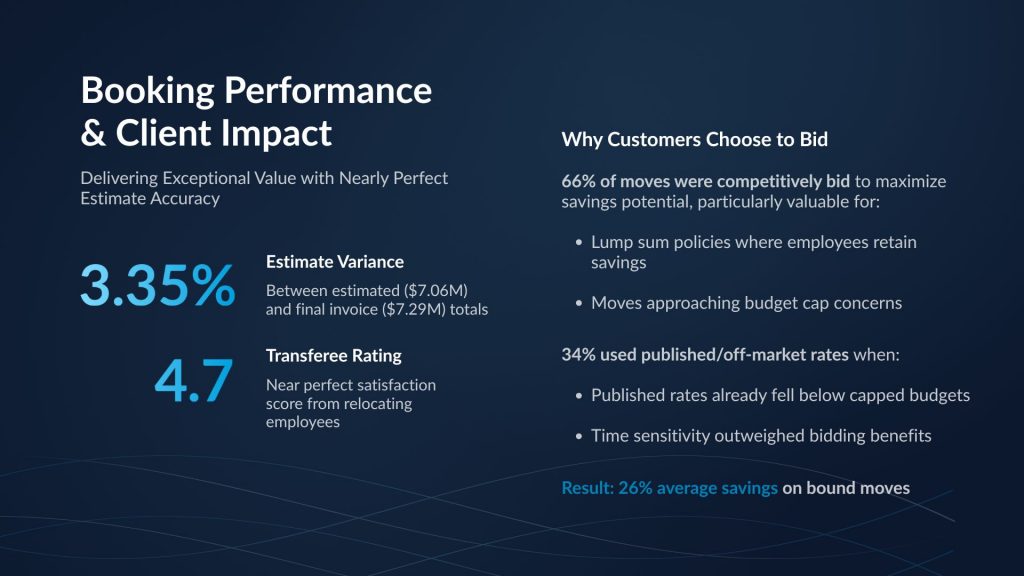
Agoyu Saves You Money
The most compelling reason to use Agoyu is simple—it saves you cash. We’re not talking about pocket change either:
Average savings of 25.64% compared to published mover rates
For a typical $1,500 local move, that’s nearly $400 back in your pocket
Long-distance moves averaging $4,500 could save you over $1,150
These savings don’t come from cutting corners or choosing lower-quality service. They’re the natural result of competitive bidding. When multiple qualified movers are competing for your business with complete transparency about your requirements, prices adjust to fair market value. You’re getting the same quality service you’d pay full price for elsewhere, just at a rate that reflects actual market competition.
The Estimate Actually Matches the Bill
Here’s a scenario that’ll sound familiar if you’ve moved before: you get a quote for $2,000, then on moving day the bill somehow balloons to $3,500. The traditional moving industry has earned its reputation for “estimate surprises” where final costs bear little resemblance to original quotes. Agoyu’s AI technology has achieved something remarkable:
Only 3.35% variance between initial estimates and final costs
Most discrepancies result from customer-initiated changes, not mover errors
No more anxiety about hidden fees or surprise charges on moving day
Traditional estimates require you to schedule in-home visits, burn PTO taking time off work, and coordinate with multiple companies just to compare prices. Then you’re stuck waiting around for estimators who might show up late or not at all. Agoyu eliminates this entire headache:
Customers save 5-7 hours per move on average
Scan your rooms with your smartphone during lunch break
Receive instant quotes and choose your mover—all done
That’s an entire workday you’re not wasting on a process that should be simple. You can spend that time actually packing or, even better, doing literally anything else.
Protection From Moving Scams
The moving industry has its share of nightmare stories. Companies that lowball estimates then hold your belongings hostage for additional payment. Movers without proper licensing or insurance who damage everything and disappear.
Fly-by-night operations that prey on people during an already stressful time. Agoyu addresses these concerns head-on by requiring insurance verification and linking directly to third-party validation sources like the U.S. Department of Transportation database. Every mover on the platform gets pre-vetted before they can bid on your job, so you’re working with legitimate, qualified professionals from the start.
Customer Satisfaction That Speaks Volumes
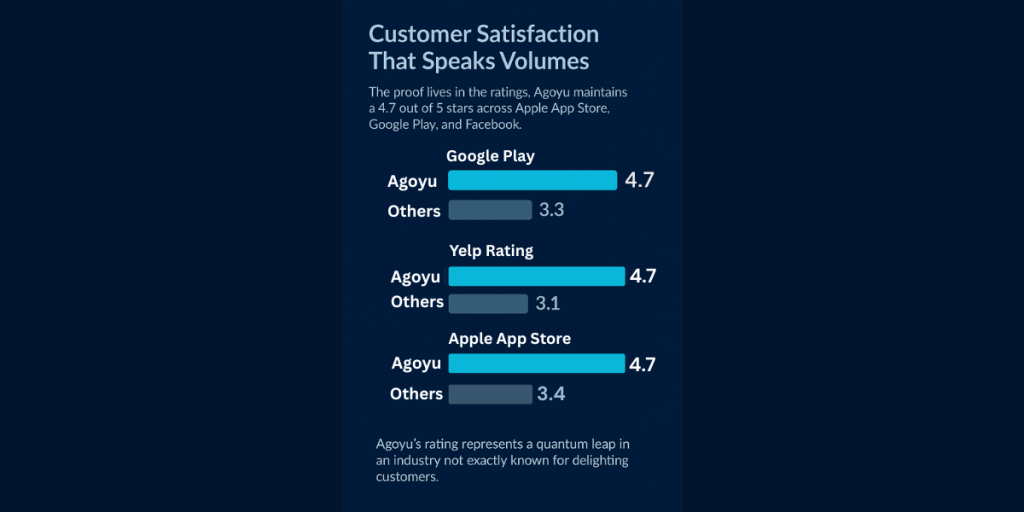
The proof lives in the ratings. Agoyu maintains a 4.7 out of 5 stars across Apple App Store, Google Play, and Facebook. To put that in perspective, the average moving company earns just 3.3 stars on Google and 3.1 stars on Yelp. Even highly reputable traditional moving services typically hover between 3.5-4.0 stars. Agoyu’s rating represents a quantum leap in an industry not exactly known for delighting customers.
Mover Benefits
Conversion Rates That Accelerate Business Growth
For moving companies, the traditional sales funnel leaks like a sieve. You’re chasing leads, providing estimates, following up repeatedly, and watching most of those potential customers vanish into thin air. The numbers tell a frustrating story—and then Agoyu’s numbers tell a completely different one:
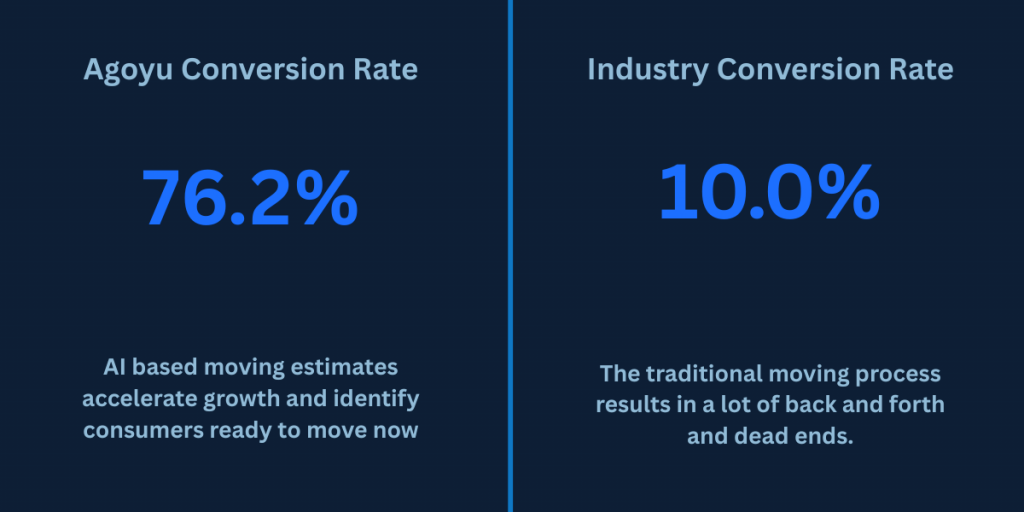
Before Agoyu: Fewer than 10% of inquiries converted to bookings
With Agoyu: Booking rates have skyrocketed to 76.2%
Movers spend less time chasing dead ends and more time actually moving customers
The platform’s accurate AI estimates and transparent pricing create buyer confidence that turns curious shoppers into committed customers. You’re not wasting resources on tire-kickers or people just fishing for the lowest number they can use to negotiate elsewhere.
Customer Acquisition Costs Disappear
Traditional moving companies pour money into advertising, lead generation services, and sales infrastructure. The average cost to acquire a single booked customer runs between $450-$600, and those expenses get passed along to consumers through higher rates. Agoyu eliminates these costs entirely by providing a centralized marketplace where qualified customers come to you. This savings allows movers to offer more competitive pricing while maintaining healthy profit margins—which means you can win more jobs without sacrificing profitability.
No More Manual Estimates
In-home estimates eat time and money. Industry averages show movers spending $150-250 per estimate when you factor in estimator salary, travel time, fuel costs, and administrative overhead. If you’re providing ten estimates but only booking one customer, that’s $1,500-2,500 in sunk costs per booking. Agoyu’s AI provides instant, accurate estimates for free. You can redirect those resources toward actual moving services, employee training, better equipment, or anything else that grows your business instead of just keeping the lights on.
Access to Ready-to-Book Customers
When customers arrive on Agoyu, they’ve already done their homework. Their items are cataloged, their requirements are documented, and they’re ready to make a decision. You receive detailed information about each job, which lets you provide accurate bids without extensive back-and-forth communication. More bookings in less time with less effort—that’s the efficiency modern businesses need to scale.
How Agoyu Stacks Up in the Industry
Agoyu operates in a massive market that’s ripe for disruption. With 31 million Americans moving each year and the global relocation industry valued at over $80 billion, the opportunity is enormous. Traditional moving companies remain limited by geography and outdated business models that haven’t evolved much in decades. Agoyu functions like “Expedia for moving”—connecting consumers with qualified movers anywhere in the world, not just domestically.
The platform’s performance metrics tell a story that’s hard to ignore. While traditional movers struggle with single-digit booking conversion rates and mediocre customer satisfaction scores, Agoyu has achieved industry-leading results across every metric that matters. The 76.2% booking conversion rate isn’t just better than the competition—it’s a complete reimagining of what’s possible when you eliminate friction and create transparency.
For an industry that causes significant stress and financial strain for millions of people annually while remaining largely unchanged for decades, Agoyu represents genuine innovation. The platform leverages artificial intelligence and marketplace competition to deliver measurable benefits to both sides of the transaction.
Whether you’re planning your next move or running a moving company looking to grow more efficiently, Agoyu offers a smarter, safer, and more cost-effective alternative to the way things have always been done. Sometimes the best solution isn’t working harder within a broken system—it’s building something better from the ground up.
Moving is never an easy task but the help of budget moving trucks can help make your move easier while helping you to save money. In this guide, we’re comparing Penske vs Uhaul to see what is more affordable and who offers the better service.
The goal is to provide you with valuable insights to help you make an informed decision when choosing between Penske and Uhaul for your next move.
Overall Opinion
A lot of articles will tiptoe around making a decision but we don’t want to be like that. We want to provide you with concrete evidence and our opinion about which one of these best rental truck companies is the better choice for what situation.
If reliability, fuel efficiency, and flexibility are crucial factors for your move, Penske emerges as a strong contender. With their well-maintained fleet and reputation for fuel efficiency, Penske trucks vs Uhaul offer a reliable and cost-effective solution for long-distance moves.
Additionally, their 24/7 roadside assistance provides peace of mind in case of any unexpected issues. If you value a seamless and efficient moving experience and are willing to potentially pay a slightly higher price, Penske may be the better choice for you.
On the other hand, if affordability, convenience, and additional services are your primary considerations, Uhaul stands out. Uhaul’s extensive network of rental locations across the country ensures that you can easily find a pickup and drop-off location near you.
With a wide range of truck sizes available and competitive pricing, Uhaul offers cost-effective solutions for various moving needs. Furthermore, Uhaul’s additional services, such as moving supplies, towing equipment, and storage options, make it a comprehensive one-stop shop for all your moving requirements.
We think Uhaul is the better choice for local moves because they charge less per mile but more for long distance moves of 100 miles or more.
If you have a longer move and you need a more reliable vehicle, Penske is the way to go.
What Does Reddit Say?
Budget vs Penske vs U-Haul? Go!
Ok I’m looking at driving 2000 miles in a 16-20’ truck. Which company has the most comfortable and best maintained vehicles? Which is going to be the least hassle?
Do you HAVE to drive the truck? We just moved from PA to UT and used upack and it was perfect. We only paid for the space we used, and it was dropped off and picked up when we asked for it. Not driving a big truck across the country made the move so much better.
I drove a 22’ Penske from Seattle to SF. No big truck experience before hand. Drove super easy. No issues. Comfortable and nothing broke. Pro tip: bring your own Bluetooth speaker if you want to listen to things on your phone. Also don’t store chocolate in the roof compartment in the cab lol.
Pros of Penske
Reliable fleet: Penske boasts a modern and well-maintained fleet of moving trucks, ensuring that customers can rely on their vehicles throughout their moving journey.
Fuel efficiency: Penske trucks are known for their fuel efficiency, which can result in cost savings, especially for long-distance moves.
24/7 roadside assistance: Penske provides round-the-clock roadside assistance, giving customers peace of mind in case of any unexpected issues during their move.
Flexible rental options: Penske offers flexible rental options, including one-way rentals, allowing customers to return the truck to a different location, which can be convenient for long-distance moves.
Cons of Penske
Limited availability: While Penske has a significant presence across the United States, their number of locations may be more limited compared to Uhaul, which could pose challenges if you are in a remote area.
Potentially higher costs: Penske’s pricing structure may be slightly higher compared to some competitors, including Uhaul. However, this can vary depending on the specific rental location and duration of the rental.
Pros of Uhaul
Extensive network: Uhaul has an extensive network of rental locations across the United States, making it easier for customers to find a convenient pickup and drop-off location.
Variety of truck sizes: Uhaul offers a wide range of truck sizes, from small vans to large trucks, catering to different moving needs.
Affordable pricing: Uhaul is known for its competitive pricing, which can be attractive for customers on a tight budget.
Additional services: Uhaul provides various additional services such as moving supplies, towing equipment, and storage solutions, offering customers a comprehensive moving experience.
Cons of Uhaul
Older fleet: Some customers have reported that Uhaul trucks may be older and less well-maintained compared to Penske trucks, potentially leading to a less reliable moving experience.
Limited availability during peak seasons: Uhaul’s popularity can sometimes result in limited availability of trucks, especially during peak moving seasons, making it necessary to book well in advance.
Need Movers? Your Move, Your Choice
Instant Exact Cost for Your Specific Move
Agoyu’s AI technology give you quick, precise estimates. Scan your
room, receive instant quotes from multiple movers, and confidently
select the best option for you.
STEP 1 OF 3
1
Enter Move Details
STEP 2 OF 3
2
Select services
**Please note you may check more than one service
or Have a Top Mover Call Me Now!
Do it the old fashion way! A top mover will call you to provide an
instant quote over the phone or at your house!
Penske vs Uhaul: Services
Use this table to stack the services of Uhaul vs Penske, side-by-side:
Service
Penske
Uhaul
One-way rentals
✔
✔
Local rentals
✔
✔
Long-distance
✔
✔
Moving supplies
Limited
✔
Towing equipment
✔
✔
Storage options
Limited
✔
Free Cancellation
48 hours before
24 hours before
Online booking
✔
✔
Penske vs Uhaul: Truck Sizes
When it comes to truck sizes, both Penske and Uhaul offer a range of options to accommodate different moving needs. Looking at Penske rental truck sizes and Uhaul sizes can help you determine which company offers more options to appeal to various sized moves.
Here is a breakdown of the different truck sizes available:
Both Penske and Uhaul have a significant presence across the United States. However, there are some variations in their availability. Penske has a widespread network of locations, but they may have fewer branches compared to Uhaul.
It’s important to check the availability in your specific area and consider the proximity of their rental locations to your starting and ending points.
Uhaul, on the other hand, has an extensive network of rental locations in many cities and towns across the country, which can make it easier to find a convenient pickup and drop-off location.
Penske vs Uhaul: Insurance
Both Penske and Uhaul offer insurance options to protect your belongings during the move. It’s essential to understand the coverage options and select the one that suits your needs.
While the specific insurance plans can vary, both companies typically offer options such as Limited Damage Waiver (LDW) or Supplemental Liability Insurance (SLI). LDW covers damage to the rental truck, while SLI provides additional liability coverage in case of accidents or property damage.
It’s recommended to carefully review the terms and conditions of the insurance coverage provided by each company and consider any additional coverage you may need.
Penske vs Uhaul: Costs
When comparing the costs of renting a moving truck from Penske and Uhaul, it’s important to note that pricing can vary based on factors such as the rental duration, truck size, distance traveled, and location.
Additionally, costs may also fluctuate depending on seasonal demand. To provide a general idea of the pricing comparison, here is a breakdown based on a sample scenario:
Rental Duration
Penske
Uhaul
1-day rental
$79-$99 per day
$19.95-$39.95 per day
7-day rental
$950-$1,200
$300-$500
1-month rental
$2,300-$2,600
$600-$900
Here is another scenario if you choose to pay per mile:
Distance
Penske
Uhaul
Local
$1.29 per mile
$0.59 per mile
100-250 miles
$300
$289 unlimited mileage
250+ miles
$960
$810 unlimited mileage
Keep in mind that these are estimates and will change depending on your location, rental vehicle size, and time of year.
Uhaul vs Penske vs Budget
If we throw Budget into the mix as a Uhaul competitor, we can compare the three options to see which of these companies provides the best service.
Budget offers a fleet of well-maintained trucks, although their availability may be more limited compared to U-Haul and Penske in certain areas. However, their trucks generally provide a reliable transportation option for moving.
Budget also specializes in truck rentals but may have a more limited selection of additional services compared to U-Haul and Penske. However, they still provide some moving supplies and accessories to support your relocation.
It’s important to consider your specific priorities when choosing between U-Haul, Penske, and Budget. If affordability and a wide range of additional services are crucial to you, U-Haul may be the preferred option over Budget.
If reliability, fuel efficiency, and a well-maintained fleet are your top concerns, Penske stands out. Budget can be a viable choice for those seeking a balance between affordability and reliability, although their additional service offerings may be more limited.
Penske vs Uhaul: Which One is the Best Truck Rental Company for Your Move?
When it comes down to just these two companies, the right choice depends on the type of move you’re planning.
Local Moves: Uhaul is often the cheaper choice for shorter distances because their per-mile rates are lower. Their huge network of pickup and drop-off locations also makes them convenient for city or same-state moves.
Long-Distance Moves: Penske is the stronger option for longer trips. They often provide newer trucks with better fuel efficiency, and most one-way rentals come with unlimited mileage, helping you avoid surprise costs.
Reliability vs. Price: Uhaul generally wins on upfront affordability, while Penske delivers more peace of mind with a modern fleet and 24/7 roadside assistance.
In short, Uhaul is a great fit for local moves on a budget, while Penske is usually the safer bet for cross-country or high-mileage relocations.
Penske vs Uhaul: Frequently Asked Questions
Is Penske cheaper than Uhaul?
Penske is cheaper than Uhaul for long distance moves because they charge a flat rate price plus unlimited mileage. Uhaul will charge you if you go over the pre-agreed upon mileage rate.
What are the Penske rental truck sizes?
Penske provides cargo van, 12-foot, 16-foot, 22-foot, and 26-foot truck options.
What packaging materials do each offer?
Both Penske and Uhaul offer packing boxes, packing materials, mattress bags, furniture covers, and other options to help with the overall shipping process. That said, Uhaul typically has more options available at their locations.
Which company has more locations?
Uhaul has a far larger footprint with thousands of locations nationwide. Penske’s coverage is strong but not as extensive, so Uhaul is usually more convenient if you need nearby pickup and drop-off options.
Which company has newer trucks?
Penske is known for having a newer, well-maintained fleet compared to Uhaul. If reliability and fuel efficiency matter most, Penske may be the better choice.
Final Thoughts
In the battle of budget moving trucks, both Penske and Uhaul offer distinct advantages. Penske provides a reliable fleet, fuel efficiency, and 24/7 roadside assistance. On the other hand, Uhaul stands out with its extensive network, variety of truck sizes, affordability, and additional moving services.
When choosing between the two, it’s crucial to consider your specific requirements, including availability in your area, desired truck size, budget, and any additional services you may need.
Agoyu is an app designed to connect you with qualified and affordable movers in your local area. These are professional moving companies that can bid on your move so you can control what you pay and who you hire.
Make your move as stress-free as possible with the powerful technology behind Agoyu! Contact us today.
Maybe you are looking to get away from the hustle and bustle of New York City and want to move somewhere beautiful and coastal, like San Francisco. Moving from New York to San Francisco might be just what you need if you are looking to experience a new adventure and scenery that is different from New York.
Cost of Moving to San Francisco
The average cost of moving from NYC to San Francisco ranges from about $2,500 to $8,000. Moving from NY to San Francisco is a very large move, as San Francisco is about 2,913 miles away from New York City. The cost estimate of moving depends on how much you plan on moving, how large your items are, and what season you are moving in.
Why are People Leaving New York?
The main reason people are leaving even the best places to live in NYC is due to the cost of living. State, city, and federal taxes are at an all time high and if property taxes are in the mix, many people are ready to leave New York City behind. Even the cost of renting is extremely high. Since most jobs offer work from home positions, many people can move wherever they want and still keep their jobs.
Why are People Moving to San Francisco From NYC?
There are many great reasons to move from New York to San Francisco, but there are also a few factors to be aware of before planning to move.
Cost of Living
Their economy is booming, the weather is nice, and there are endless options for getting outdoors and staying active in San Francisco. However, their cost of living is just as bad as New York City, if not worse. The housing cost and childcare costs are almost twice as much as NYC but food and groceries cost about the same between the two cities. Many people are moving to San Francisco from New York strictly for the relaxed vibes and mild weather, not because the cost of living is less expensive than NYC.
Entertainment and Nightlife
There are so many fun things to do for entertainment in San Francisco, especially at night. If you have never gone on the Alcatraz Night Tour, you should make it a priority. It is a short ferry ride from the city that will give you a look at where some of the most well-known criminals were imprisoned (like George “Machine Gun” Kelly and Al Capone).
If seeing Alcatraz is a bit much, consider seeing a midnight movie at The Clay Theater in Fillmore. Every Friday night they play a movie, such as Pulp Fiction, The Room, or The Rocky Horror Picture Show. You can visit the Exploratorium and Academy of Sciences as well, as they offer a museum, planetarium, and more. They do something called “After Dark at the Exploratorium” where they open up their cocktail bar and allow you to explore the exhibit. Of course, there are many other great restaurants, bars, and clubs you can visit too, like F8 Nightclub and Bar, and Smuggler’s Cove.
Economy
San Francisco’s economy isn’t all that bad. The unemployment rate is 5.4 percent in San Francisco, while in NYC it is 8.4 percent. San Francisco’s job market has increased 1.3 percent over the past year and their future job growth throughout the next decade is likely to be close to 39.1 percent, which is higher than the United State’s average of 33.5 percent. So if you move to San Francisco, it shouldn’t be too difficult to find a job.
Weather
The cool, coastal climate in San Francisco usually reaches 80 degrees or higher about 21 days out of a year. This weather is great because it doesn’t usually get cool enough to have to scrape frost off your windshield in the morning, which is a huge time saver. You will not want to consider leaving California once you get a taste of their mild weather.
The coolest San Francisco typically gets is around 50 degrees in the winter. There is a long stretch of what is considered their “rainy period” from November to April where the temperature is cool and it rains about 70 days throughout that timeframe. The annual average of rain in San Francisco is around 24 inches, which seems like a lot but isn’t that bad. Some people would prefer to live in an area that is hot and sunny most days of the year, which is why there are quite a few people that move from California to Florida.
Public Transportation
There are quite a few options when it comes to public transportation in San Francisco. There are multiple means of public transportation, like bus, cable car, and streetcar. The costs of using bus and rail rides are $2.50 and the cost of using a cable car is $7. With all of these options, there are available discounts that can be applied for senior citizens or for children. If you purchase a Muni passport for the public bus system, you can get unlimited rides of one, three, or seven-day periods ranging in price from $21 to $42.
There is also the Golden Gate Ferry Service which offers transportation through the water between central San Francisco to nearby communities, like Tiburon and Sausalito. The cost of one-way fares varies depending on where you are heading, but typically prices begin at $11 for adults. You can also take the Blue and Gold Fleet ferry service where their one-way tickets start at $6.60 but can be higher depending on your destination.
Culture
The culture is extremely diverse in San Francisco. When it comes to music, arts, cuisine, architecture, and museums, there is so much diversity. The culture in San Francisco is greatly influenced by its large Hispanic population, Mexican culture, and their history of once being a part of Mexico and Spanish America.
What Does Reddit Say?
Considering a move from NYC to SF
Hi everyone! been browsing this subreddit and other stuff for a minute now considering a move from NYC to SF when my lease is up. I work in hospitality (26F) and live with roommates so I wouldn’t be opposed to a similar arrangement. Unless there’s a chance of renting a studio for around or under $1500 but idk. I’ve spent most of my life in the NJ/NYC area and feeling like I’m at a point where I want a change. I did live in Seattle for about 7 months and really enjoyed it. The balance of nature and city life was really wonderful. I’ve visited SF a few times and loved the food, different neighborhoods, and how it was still walkable/easy to get around. And the people were a lot friendlier than in the northeast. I guess my question is for others who might have made a similar move, what do you like about it or what don’t you like? Also for dating! I’m single so what’s your dating experience been like in SF
Moved from Brooklyn to SF a year and a half ago and don’t regret it at all. It goes without saying that it’s much smaller than NYC, but it’s still dense enough to feel like an actual city.
Public transport isn’t amazing, but depending on where you live and work, your current commute may actually be longer than what it would be in SF due to the sheer distance you need to cover in NYC.
The biggest perk on a day-to-day basis is the weather. This is obviously different based on everyone’s preference, but I hated NYC weather – it’s oppressively hot and humid for 4 months and freezing cold for another 4 months, meaning that for 2/3 of the year it’s unpleasant to be outside.
And like others said, it’s nice to be able to leave the city to access nature without it taking forever. In NYC, it usually took me an hour just to actually get a rental car and then another two to make it to our destination.
Frequently Asked Questions
Is it cheaper to live in San Francisco or New York?
Both cities are among the most expensive in the U.S., but costs vary depending on what you compare. Housing and childcare in San Francisco often run higher than New York, while food and transportation can be about the same. Overall, neither city is truly “cheap,” but San Francisco edges slightly higher in living costs for most people.
Is it worth moving to California from New York?
That depends on what you value. Many people move for California’s milder weather, outdoor lifestyle, and booming job market. If those factors outweigh the higher housing costs, it can be worth the move. Others who prioritize affordability may find New York’s options more practical.
Is San Francisco becoming cheaper?
While there have been slight dips in rental prices during certain economic downturns, San Francisco is still one of the most expensive cities in the country. Long-term, the city’s limited housing supply and strong demand mean prices remain high.
What’s the average salary needed to live comfortably in San Francisco?
Most experts suggest you’d need a salary of at least $120,000–$150,000 per year to live comfortably in San Francisco, depending on your lifestyle and family size. This accounts for high housing, transportation, and everyday expenses.
How does moving from New York to San Francisco affect quality of life?
Many people find the move improves their quality of life thanks to better weather, access to nature, and a slightly slower pace of living compared to New York. But the higher housing costs and smaller city size can be a drawback for those who thrive on New York’s constant energy.
Considering a Move to San Francisco?
If you are considering moving from New York to San Francisco, using an online platform like Agoyu can be beneficial. With Agoyu, you can view and compare the costs and mover services without worrying about being scammed by movers when moving from NY to Sa Fran. Check out Agoyu today to find a moving company from New York to California so we can help make your dream a reality.
Moving can be a stressful and expensive endeavor, but with the rise of innovative solutions like PODS (Portable On-Demand Storage), the process has become more convenient and affordable. This article will explore the cost of using PODS for your next move.
We will delve into the various factors that influence the price, the different types of moves, how PODS work, the associated fees, the sizes of PODS containers, the benefits of using PODS, and whether PODS offers vehicle shipping.
By the end, you will have a comprehensive understanding of the cost of PODS and why it may be the right option for your move. So, how much do PODS cost?
By the way, we’ve partnered with PODS to get you a 5% discount on all their products! Click here to learn more!
What Are PODS?
Before we dive into the cost of using PODS, it’s essential to understand what they are. PODS are portable storage containers that allow you to store and transport your belongings during a move or renovation.
These containers are delivered directly to your location, allowing you to pack at your own pace. Once you have finished loading, the container can be stored on-site, transported to a new location, or kept at a secure PODS storage facility.
Cost of PODS Storage Containers
The cost of using PODS depends on various factors. Here are some key elements that influence the price:
Storage: If you need storage for a longer duration, you can expect to pay more compared to a shorter-term solution.
Size of the POD: PODS come in different sizes, and the larger the container, the higher the cost.
Number of PODS needed: If you have a larger volume of items to move, you may require multiple PODS, increasing the overall moving POD cost.
Distance: The distance between the pick-up and drop-off locations affects the price, with longer distances typically resulting in higher costs.
Type of Move
Local Move
Under 250 Miles
Cross Country Move
1 Bedroom Home
$300-$600
$1,500-$3,000
Starting at $1,500
2 to 3 Bedroom Home
$500-$1,000
$2,000-$4,000
Starting at $2,000
4 to 5 Bedroom Home
$800-$1,500
$3,000-$6,000
Starting at $3,000
Please note that the prices are approximate ranges and can vary based on factors such as location, distance, container size, and additional services required.
Requesting a personalized quote from PODS or consulting with their customer service is always recommended to get accurate PODS pricing for your specific move. If you’re wondering how much is a POD or searching for PODS prices, it’s best to request a PODS quote for your exact needs.
What Does Reddit Say?
PODS review I’m leaving this review for anyone considering PODS to relocate. Stats: got a 16″ container and moved 700 miles. Total cost was $2,223. Researched all the companies and decided to go with PODS based on the container size, and ease/flexibility of loading a pod. I did not have the nightmare experience others have mentioned. Maybe this is due to booking it 4 months in advance? I had my destination address set already and booked my move during Feb, hoping the rates would be lower. The only negative experience is the drivers do not give an F and will drop the POD wherever . See photo. Allegedly a low wire was in his way so he “had” to drop the POD halfway in my front yard. On the other end, the POD driver put it perfectly in the driveway. They allowed me to change dates a couple times without extra charges. I HIGHLY recommend hiring movers to load your POD. I had 8 ratchet straps from Harbor Freight and prob could have used more. The movers said most people just have 4 or 5 straps and that’s never enough. I noticed they made a huge X with the straps to secure my contents. Two guys loaded it in just 2.5 hours. Got all my moving blankets off FB Marketplace and had a roll of shrink wrap ready to go. Used an $8 circular lock from Harbor Freight. Nothing was broken, wet or damaged inside. Ask any questions you might have, I was quite nervous to use PODS after reading things on here but I had a good experience and would definitely use them again.
How Do PODS Work?
To better understand the cost, knowing how PODS work is essential. Here are the key steps involved:
Delivery: Once you schedule a delivery, the PODS container will be brought to your location at the specified time. You can keep it on your property for as long as you need.
Storage: If you require storage, you can load your belongings into the PODS container at your own pace. Once you’re done, you can keep the container on your property or transport it to a secure PODS storage facility.
Off-Site Temporary Storage: If you need your belongings stored off-site temporarily, PODS can accommodate this as well. Your container will be transported to a secure storage facility until you can deliver it to your new location.
PODS Fees
While PODS offers convenience, being aware of the associated fees is essential. Some standard prices include:
Delivery and pick-up fees: These charges cover the transportation of the PODS container to and from your location.
Monthly rental fees: If you require PODS storage for an extended period, you will be charged a monthly fee.
Additional storage fees: There may be additional charges if you need to store your container at a PODS storage facility.
It’s essential to thoroughly review the fees and understand the terms before using PODS for your move.
Sizes of PODS Containers
PODS containers come in different sizes, each catering to specific needs. Here are the common sizes available:
8 Feet: The smallest PODS container has a weight limit of around 5,200 pounds and is suitable for one or two rooms. It’s ideal for local moves or when space is limited.
12 Feet: With a weight limit of approximately 4,700 pounds, the 12-foot container can accommodate two to three rooms. NOTE: 12-foot containers cannot ship long-distance.
16 Feet: The largest PODS container has a weight limit of around 4,200 pounds and can hold three to four rooms. It’s well-suited for larger moves or when you have more belongings to transport. These are the ideal choice for long-distance moves.
What Are PODS Used For?
PODS containers are more than just a moving solution—they’re versatile and can fit into a wide range of situations. Whether you’re asking how much are PODS for moving or looking for extra storage, here are some of the most common uses:
Residential Moving
The most popular use for PODS is residential moving. Containers are delivered right to your driveway, giving you the flexibility to pack at your own pace. You avoid multiple trips and can plan around your schedule while still keeping costs transparent with clear PODS rates and options for every size of move.
Seasonal Storage
Many people use PODS for seasonal storage. Holiday decorations, lawn equipment, or patio furniture can easily be stored in a container without taking up garage or basement space. Since PODS storage cost is usually calculated monthly, it’s easy to budget for just the time you need.
Temporary Storage During Renovations
If you’re renovating your home, a PODS container can serve as a secure on-site space for your furniture and valuables. This eliminates the stress of squeezing belongings into other rooms. Plus, you’ll have the peace of mind of weather-resistant storage right outside your home.
Business Storage
Companies often use PODS for excess inventory, office furniture, or files that don’t fit inside the workplace. A PODS quote can quickly give businesses an idea of how much space they’ll need and what the PODS rental cost will look like.
Temporary or Mobile Workspace
Some organizations even use PODS as mobile or temporary workspaces. With sturdy construction and ground-level access, they can be adapted for onsite offices at job sites or events.
Decluttering
Before selling your home, a PODS container is an easy way to declutter. You can safely move items out of sight, making your house more appealing to buyers without worrying about hauling things to a storage unit.
Emergency Storage
PODS are also valuable in emergencies such as floods, fires, or other unexpected events. They provide fast, secure storage when you need to protect belongings right away.
Benefits of Using PODS for Moving
Using PODS for your move offers several advantages:
Affordability
PODS can help you save money when moving, especially for local moves, as you can pack and load at your own pace. PODS are often considered affordable due to several factors:
Flexible packing and loading: With PODS, you can pack and load your belongings at your own pace, potentially reducing the labor costs of hiring movers.
Cost transparency: PODS provides transparent pricing that typically includes the PODS rental, transportation, and sometimes storage fees. This allows you to have a clear understanding of the costs involved upfront.
Customizable services: PODS offers a range of services that can be tailored to your specific needs. You can choose the container size, storage duration, and additional services based on your budget and requirements.
Elimination of additional expenses: Having the storage container delivered directly to your location eliminates the need to rent a separate truck or make multiple trips to a storage facility, potentially saving on transportation costs. Moving a three-bedroom house with PODS can cost significantly less than hiring a moving company.
Avoidance of strict timelines: PODS provide the convenience of packing and loading at your own pace without the pressure of adhering to strict moving timelines. This flexibility can help reduce stress and potential rush fees.
Agoyu’s AI technology give you quick, precise estimates. Scan your
room, receive instant quotes from multiple movers, and confidently
select the best option for you.
STEP 1 OF 3
1
Enter Move Details
STEP 2 OF 3
2
Select services
**Please note you may check more than one service
or Have a Top Mover Call Me Now!
Do it the old fashion way! A top mover will call you to provide an
instant quote over the phone or at your house!
Convenience
With PODS, you can avoid the stress of moving on a strict timeline. The containers are delivered to your doorstep, allowing you to pack and unpack at your convenience. PODS is considered convenient for several reasons:
Flexible timeline: With PODS, you can pack and load your belongings at your own pace. There’s no need to rush or adhere to strict moving timelines, allowing you to work according to your schedule and convenience.
On-site delivery and pick-up: PODS containers are delivered directly to your location, whether it’s your current home or business. This eliminates the need to arrange transportation or make multiple trips to a storage facility.
Accessibility to belongings: Since the PODS container is delivered to your location, you can easily access your belongings throughout the packing and loading. This makes it convenient to retrieve items or make last-minute additions or changes.
Secure storage options: PODS can transport your loaded container to a secure storage facility if you require temporary storage. This provides peace of mind, knowing that your belongings are safe and accessible whenever needed.
Local or long-distance moves: Whether you’re moving locally or across the country, PODS can accommodate both types of moves. They offer transportation services for both short and long distances, providing convenience regardless of the move’s scope.
Multiple container sizes: PODS offers a range of container sizes, allowing you to choose the one that best suits your needs. Whether you have a small apartment or a large house, there’s a container size that can accommodate your belongings.
No need for truck rental: Unlike traditional moving methods, PODS eliminates the need for renting a separate moving truck. The container serves as the transport vehicle, simplifying the logistics and reducing potential rental costs.
Durability
PODS containers are designed to withstand various weather conditions, ensuring the safety of your belongings during transport or storage. PODS is intended to be durable and withstand multiple environmental conditions. Here are some reasons why PODS is considered durable:
Robust construction: PODS containers use sturdy materials like steel frames and durable weather-resistant panels. This construction ensures the containers can withstand the rigors of transportation and protect your belongings.
Weather-resistant: PODS containers are designed to be weather-resistant, protecting your belongings from moisture, rain, and extreme temperatures. The materials used in their construction help to prevent water intrusion and maintain a stable interior environment.
Secure locking system: PODS containers feature a secure locking system that helps protect your belongings from unauthorized access. The lock helps keep your items safe and secure during transport and storage.
Ground-level loading and unloading: PODS containers are designed to be ground-level, allowing easy loading and unloading without ramps or lifts. This design feature minimizes the risk of accidents or damage to your belongings during moving.
Structural integrity: PODS containers are built to maintain their integrity even when stacked or transported. This ensures your items remain secure and protected, even when multiple containers are used.
Transportation equipment: PODS uses specialized equipment, such as delivery trucks equipped with lift systems, to handle the transportation of containers. This equipment is designed to safely handle the weight and size of the containers, minimizing the risk of damage during transport.
Cost Flexibility
When comparing PODS prices to traditional moving companies, you often find more flexibility. Since you only pay for the time and size you need, the question “how much is a POD?” depends on your situation. A personalized PODS quote ensures you’re only paying for what you use, which can make the moving process more affordable than hiring a full-service team.
Does PODS Offer Vehicle Shipping?
While PODS specializes in storing and transporting your belongings, they do not offer vehicle shipping services. If you need to transport your vehicle, you may need to explore other options or consult with a specialized vehicle shipping company.
Factors in Calculating PODS Moving Cost
Several factors are taken into account when calculating the PODS moving cost:
PODS Container Size: The size of the container you choose will directly impact the overall cost, with larger containers typically being more expensive.
Moving Distance: The distance between your current location and the destination is a significant factor in determining the cost. Longer distances generally result in higher prices.
Container Quality: The condition and quality of the PODS container can influence the price. Newer, well-maintained containers may come at a premium.
Moving Time Frame: With a flexible moving schedule, you can secure better rates than peak moving seasons when demand is higher.
Location: The location of your move can affect the cost due to varying regional pricing and availability.
Insurance: It’s essential to consider insurance coverage to protect your belongings during transit or storage. Additional insurance options may come at an extra cost.
How Much Do PODS Cost? FAQs
What is cheaper: PODS or a moving company?
Sometimes, PODS can be more cost-effective, especially for smaller moves or those requiring flexible timelines. With PODS, you have the advantage of being able to pack and load at your own pace, potentially reducing labor costs. Additionally, you only pay for the moving and storage costs and transportation services you require.
Hiring a moving company typically involves a team of professionals who handle the entire moving process, from packing to loading and unloading. While this can save you time and effort, it comes at a higher cost.
What do PODS stand for?
PODS is an acronym for “Portable On-Demand Storage.” PODS created the concept of portable storage in 1998, referring to their portable on-demand storage as PODS to make it easier to remember and pronounce.
Is PODS less money than a storage unit?
When you use a storage unit, you often need to rent a truck to transport your belongings to and from the facility, and you may need to pay for additional services such as loading and unloading assistance.
With PODS, the container is delivered to your location, eliminating the need for a separate truck rental. You also have the convenience of packing and loading at your own pace.
What size POD do you need for a significant move?
The 16-foot PODS container is generally the most suitable choice for a large move involving four to five bedrooms.
This container has a weight limit of around 4,200 pounds and can accommodate the belongings of several rooms. It provides ample space for furniture, appliances, and boxes, making it ideal for larger moves.
What is the typical cost of a pod?
The typical moving PODS cost varies based on size, distance, and length of storage. On average, local moves might range a few hundred dollars while long-distance moves often run into the thousands. Requesting a PODS quote is the best way to get an exact number.
Is it cheaper to rent or buy a pod?
Most people find it more cost-effective to rent. Buying would involve high upfront costs and ongoing storage issues. PODS rental cost gives you short- or long-term flexibility without the burden of ownership.
Is it cheaper to rent a pod or a storage unit?
A storage unit might have a lower monthly fee, but you’ll often need to rent a truck and move items back and forth yourself. When comparing PODS storage cost to a unit, the convenience of delivery and pickup often makes PODS the better deal for many people.
Conclusion
Moving can be complex and costly, but PODS offers convenience, flexibility, and affordability. The cost of using PODS depends on various factors, such as the size of the container, the distance of the move, the duration of storage, and any additional services required.
By understanding the different types of moves, how PODS work, the associated fees, the sizes of containers available, and the benefits of using PODS, you can make an informed decision about whether it’s the right solution for your specific moving needs.
Remember to consider your budget, timeline, and the level of convenience you desire when comparing PODS to other moving options. With careful planning and research, PODS can provide a seamless and cost-effective solution for your next move.
For a stress-free and cost-efficient moving experience, consider using Agoyu. The Agoyu app can help connect you with the best and most qualified movers in your local area. Try Agoyu today!
As an expert in moving services, it is common for there to be confusion between an garage sale vs estate sale. It’s important that you understand what these are and what works best for your unique situation.
Keep in mind, there’s also garage sales vs yard sales which is a completely different discussion. If you’re moving, chances are you’ll need to use one of these.
We’ll cover them in detail below, but before we do that, if you’re moving and looking for a quick quote on vetted, pre-screened movers that can handle everything for you, get a quick quote here:
What Is an Estate Sale?
Estate Sales are a little different than garage sales. Estate sales are held inside a home, usually to sell the items of a recently deceased person, and can also be held to sell the items inside a home that has been foreclosed or abandoned. If the estate sale is being held after a person has passed away, the family members of that person will typically hold the sale.
When people ask about estate sale meaning, it usually refers to the organized process of selling most or all of a household’s belongings, often due to a major life event such as a passing, relocation, or foreclosure.
Sometimes, companies are hired by family members to hold the estate sale to lessen the burden of selling the belongings throughout the whole home. At estate sales, there are various items that are being sold because there are items that have been collected throughout a person’s entire life.
Many people go to estate and garage sales if they are looking to purchase vintage clothing, antique furniture, fine china, or rare art. Estate sales are usually held throughout a three-day period, typically over a weekend. They are usually held before deciding to contact residential moving services to lessen the load of their belongings.
They are advertised ahead of time using posters, newspaper ads, or social media. The price of the items for sale are usually not up for negotiation, but you can sometimes bid on items that are high in price.
What does Reddit say?
Garage sales and estate sales are very much worth your time and cash. I know this depends on your area, but even if you’re in a city it might be worth it to make the trip to the suburbs. Look for basics – sheets, curtains, kitchen stuff, rugs, tools, yard equipment, camping supplies, sports gear…
So many people go looking for clothes, antiques, and art/knick-knacks. You can get quality stuff for pennies on the dollar, that is just fine after a good cleaning. Estate sales are literally the entire contents of someone’s home. Just this weekend I got a basically brand new Kitchen-Aid mixer for $10 and a nice gas-powered edger for $7. A milk crate of unopened garden stuff like Miracle-grow and Roundup for $3. And books, so many books. It’s worth it to show up and look around, bring cash and don’t feel ashamed about haggling on price.
Do You Need a Permit for an Estate Sale?
Typically, the company you choose to hold the sale for you already has a license and permit for them to have the sale. If you are hosting an estate sale without a company’s help, you will need to contact your local town hall or borough building to obtain a permit.
The Benefits of Estate Sales
An estate sale offers more than just a way to clear out belongings — it provides structure during a difficult or transitional time. Families often find relief knowing that items collected over a lifetime are going to people who will value and use them. Unlike a garage sale, where smaller items and everyday goods are the focus, estate sales often attract serious buyers searching for antiques, collectibles, or higher-end pieces.
Another benefit is efficiency. Instead of spending weeks trying to sell individual items, you can handle most of the process over a weekend. Professional estate sale companies also bring pricing expertise, which can help maximize what you earn. For many, this makes the process less overwhelming and more rewarding, both financially and emotionally.
What Is a Garage Sale?
Garage sales are held to discard unwanted items in a person’s household. At garage sales, you will see a lot of things like children’s clothing, toys, kitchen utensils, sporting gear, and books. You can even find old furniture up for sale, but it isn’t always in the best condition.
Garage sales are usually held over the weekend in the Fall and are advertised well in advance. Sometimes, the sale doesn’t last a whole weekend. This is if the sale is for a small one-bedroom apartment or a duplex home.
Posters, flyers, newspaper ads, or posts on social media are often used to advertise the sale. You are able to negotiate at garage sales, which makes it interesting. Typically, the homeowner holding the sale is eager to get rid of their unwanted items so don’t be afraid to negotiate.
Need Movers? Your Move, Your Choice
Instant Exact Cost for Your Specific Move
Agoyu’s AI technology give you quick, precise estimates. Scan your
room, receive instant quotes from multiple movers, and confidently
select the best option for you.
STEP 1 OF 3
1
Enter Move Details
STEP 2 OF 3
2
Select services
**Please note you may check more than one service
or Have a Top Mover Call Me Now!
Do it the old fashion way! A top mover will call you to provide an
instant quote over the phone or at your house!
Estate Sale vs Garage Sale
There are a few differences between garage and estate sales. Garage sales are held by the owner of a house and estate sales are held by a person or company. Estate sales usually have more valuable items that are for sale and garage sales have less valuable items.
When people want to know the difference between garage sale and estate sale, they often look at item value, the way the sale is organized, and whether negotiation is expected.
Estate sales vs yard sales are usually advertised a bit more than a yard or garage sale, including online. When the sale is advertised online, it can attract potential buyers from anywhere. Garage sales are typically advertised locally by using posters and handmade flyers.
There is not much of a difference between yard sales and garage sales. Each of these sales is for homeowners to get rid of unwanted items that they no longer need or want.
People sometimes also ask about estate sale vs yard sale, which is a different comparison since estate sales usually involve higher-value items and are often managed by professionals, while yard sales are casual and focused on clearing everyday household goods. In some cases, families even host an estate yard sale when they don’t want to go through the process of a full estate liquidation.
Garage sales might take place in a garage or driveway, and yard sales might be spread across a person’s yard. These sales can also extend to the inside of a person’s home.
Differences Between Estate and Garage Sales
While both estate and garage sales are ways to sell unwanted belongings, they’re very different in scale and purpose. An estate sale is typically held inside the home and often involves selling most or all of a household’s possessions.
These sales are usually tied to major life events such as a passing, foreclosure, or a significant move. On the other hand, a garage sale is a smaller, more casual event designed to clear out everyday household clutter like clothing, books, or toys.
The level of organization also sets them apart. Estate sales are often managed by professionals who can price items correctly and attract serious buyers. Garage sales, by contrast, are usually organized by the homeowner and rely on local advertising.
Pricing is another difference — negotiation is common at garage sales, while estate sales typically have firm prices unless high-value items are being auctioned.
Ultimately, understanding the difference between garage sale and estate sale helps you choose which option makes the most sense based on the amount and type of belongings you’re selling.
Pros of an Estate Sale
The sellers receive cash upfront
Can save senior citizens time and energy
Makes moving less stressful
Get rid of items in a short amount of time
Companies that do estate sales can help maximize profits from the items
Cons of an Estate Sale
Sellers can end up receiving less money than expected from the sale
Not all estate sale companies are legitimate, so it is important to be cautious when choosing a company
Whatever you don’t sell, you will need to get rid of
You need to split the profits with someone else
Pros of a Garage Sale
You can get a lot of cash quickly for your unwanted things
You don’t have to take your junk any further than your garage or yard
Invite friends to sell their unwanted belongings too, so the sale looks more appealing
Negotiate the price of your unwanted items with buyers
You can donate the remaining items after the sale is over
Cons of a Garage Sale
It takes lots of preparation to hold the sale
It can be overwhelming organizing your unwanted belongings
Supplies like stickers, tape, pens, signs, and markers cost money
You might feel exhausted after the sale
Frequently Asked Questions
Are estate sales better than garage sales?
It depends on your situation. Estate sales are better if you need to sell a large number of valuable items quickly, often with the help of professionals. Garage sales are more practical for clearing out everyday household goods at lower prices.
What are the disadvantages of estate sales?
The biggest drawbacks include sharing profits with an estate sale company, the risk of receiving less money than expected, and the need to dispose of unsold items afterward. Some families also find the process emotionally draining if the sale follows a loss.
Why do they call it an estate sale?
The term comes from the fact that the sale usually involves liquidating the personal property of an estate — often after a death, foreclosure, or major life change. The goal is to sell most or all belongings tied to that estate.
Can I call my garage sale an estate sale?
Technically, no. A garage sale is typically a casual event with a smaller selection of household items, while an estate sale usually involves the full contents of a home. Calling a garage sale an estate sale can mislead buyers who are expecting antiques, collectibles, or higher-value pieces.
Final Thoughts
Having an estate sale vs garage sale can be stressful, especially if you have a lot of belongings you are looking to sell. Consider using a moving cost calculator to figure out what items you want to sell and what items you want to keep.
To help make the process easier, you can search for a local company to help with estate sales on Agoyu. Agoyu is a free online tool to help you search for moving companies, compare pricing, and schedule a time to meet with the company.
🍪
We use cookies to power your move
We use cookies and similar technologies to enhance your experience,
analyze traffic, and show relevant content.
Read our
Privacy Policy
and
Cookie Policy
to learn more.