Apartment Moving Checklist: The 8-Week Timeline, Move Day, and Your First Week
An apartment move fails in predictable places: the elevator nobody reserved, the lease rule nobody read, the box of chargers nobody can find on the first night. None of those are packing problems. They are timing and building problems, and a checklist built around a timeline solves them. This is that checklist. It starts eight […]
Shop Movers with AI


An apartment move fails in predictable places: the elevator nobody reserved, the lease rule nobody read, the box of chargers nobody can find on the first night. None of those are packing problems. They are timing and building problems, and a checklist built around a timeline solves them.
This is that checklist. It starts eight weeks out, walks week by week to move day, covers the apartment specific rules that house moves do not have, and finishes with the part most checklists split into separate pages: what you actually need to buy for your first week, room by room, whether this is a rental apartment or your first home. One page, start to finish.
Key Numbers: Apartment Moves on Agoyu
- Up to 25 moving quotes in under 3 minutes on an average lane, from published rates plus discount asks.
- 86 long distance movers in the platform, with published rates and live bids on real moves, including apartment sized moves.
- $100,000 of insurance with no deductible included in the price of every move booked through Agoyu, not sold back to you as an add on.
- A patented AI platform (U.S. Patent No. 12,602,645 B2) that prices your move from a scan of your actual home, not from a form you filled in from memory.
- Apartment sized loads, priced by scan. Your price comes from a scan of the actual apartment, so the load that has to fit your elevator and stairwell is the load you are quoted on.
- 12 bids on average on a posted move, so an apartment move is priced by competition, not by the first quote you get.
8 Weeks Out: Set Up the Move
- Create one move folder. Lease, new address, mover paperwork, receipts, building contacts, and confirmations in one place, paper or digital. Every later step assumes you can find these in under a minute.
- Lock the basic details. Old and new addresses, move out and move in dates, lease end and start dates, and any overlap days you are paying for twice. Overlap is expensive but useful: even one overlap day turns move day from a deadline into a schedule.
- Build the budget. Movers or truck rental, packing supplies, deposits, overlap rent, utility connection fees, and the first week shopping list further down this page. Apartment moves hide costs in the building and the overlap, not just in the truck. Where access fees apply, industry planning ranges put stair or elevator carries at $75 to $150 per flight and long carries at $50 to $150 per segment.
- Purge before you pack. Go room by room and sort keep, donate, sell, and discard. If you have not used something in over a year, it is a strong candidate to go. Every item you drop is an item you do not pack, pay to move, or unpack. Apartment moves are priced and carried by volume and stairs, so a smaller load is a cheaper and faster load.
- Measure both places. Door widths, hallway turns, elevator dimensions, and the rooms in the new apartment. A sofa that fit the old living room may not make the new hallway turn, and finding that out on move day is the worst version of finding out.
7 Weeks Out: Research Movers and Build Your Inventory
- Research movers now, not later. Apartment friendly dates, especially month end weekends, book out first. Read reviews for patterns, and compare what each quote actually includes.
- Build a real inventory. List what you own, room by room, with condition notes. The inventory does three jobs: it makes quotes comparable, it tells you what to pack first, and it is your record if anything is damaged and you need to file a claim.
- Decide your method honestly. Full service movers, a portable container, or a rental truck. Apartments add stairs, elevators, and loading rules to every method, so price the method against your building, not just your budget. The decision guidance further down this page walks through the trade offs.
6 Weeks Out: Book, and Clear the Building Rules
- Book your mover or truck and confirm pickup and delivery times, addresses, and contact numbers in writing.
- Reserve the building pieces. This is the step apartment movers skip and regret:
- Elevator reservation at both buildings, if either has one. Many buildings require it and will turn an unreserved crew away from the freight elevator.
- Loading dock or parking permission for the truck, including any city permit your building or street requires.
- A certificate of insurance from your mover, if your building management asks for one. Many do, and they ask before move day, not during it.
- Approved moving hours. Some buildings allow moves only on weekdays or only in set windows.
- Tell both landlords the plan. Move out inspection scheduling at the old place, key return, and move in conditions at the new place, including where the truck can stand.
5 Weeks Out: Supplies and the First Boxes
- Collect packing supplies. Small and medium boxes (apartments reward smaller boxes: stairs and elevators punish heavy ones), packing tape, packing paper, bubble wrap for fragile items, markers, labels, wardrobe boxes if you have hanging clothes, and zip top bags for hardware and small parts.
- Start with non essentials. Decorative items, off season clothing, books, spare linens, and anything you can live without for a few weeks. Label every box with the contents and the destination room in the new apartment, not the room it came from.
- Use the space savers. Vacuum space bags compress pillows, blankets, and puffy jackets to a fraction of their size. Leave hanging clothes on their hangers and group them inside heavy duty bags, so they go from closet rod to closet rod. The full packing method lives on our packing and moving tips hub.
4 Weeks Out: Address, Utilities, and Paperwork
- Change your address. File the change with the post office, then work through banks, cards, subscriptions, insurance, and your employer. Mail forwarding catches some of what you miss, not all of it.
- Schedule utility transfers. Electricity, internet, gas, and water where applicable, with start dates at the new apartment set for the day before you arrive. Internet installation appointments are the one most often forgotten and the one most missed on the first night.
- Review renters insurance. Update the policy to the new address and confirm your belongings are covered during the move itself, not just at rest in either home. Moves booked through Agoyu include full insurance with no deductible up to $100,000; if you are moving yourself or hiring outside a platform, check what your own policy and the mover’s terms actually cover before move day, not after something breaks.
- Ask for time off. Move day plus at least one day after. Unpacking always takes longer than the plan.
- Handle pets early. Vet records and vaccination proof, which many landlords require, plus a plan for where the pet is on move day. Open doors and strangers carrying furniture are how pets get lost during moves.
2 to 3 Weeks Out: Pack the Middle of Your Life
- Pack room by room, leaving only daily necessities out. Keep box weights carryable: you, a crew, and possibly three flights of stairs will all be lifting them.
- Confirm everything, out loud. Mover, both buildings, elevator reservations, parking, and any helpers. Confirm dates, times, and addresses, and get changes in writing.
- Stop buying groceries beyond what you will eat before the move. Run the freezer down. Food is heavy, perishable, and the least rewarding thing to pack.
- Photograph your electronics setups before you unplug anything. A photo of the back of the TV or desk setup is worth twenty minutes of guessing at the new place.
The Last Few Days
- Pack an essentials bag and an essentials box, and keep both with you. Chargers, medications, toiletries, a change of clothes, basic tools, tape, a box cutter, trash bags, toilet paper, soap, snacks, and pet supplies. This is your first night kit. If everything else goes wrong, this bag is the move still working.
- Finish packing, including the cleaning supplies you will need for the old apartment after the furniture is out.
- Final confirmations. Movers, buildings, helpers, and key pickup for the new place. Confirm where the truck parks at both ends.
- Defrost and drain anything that needs it, and set aside the items that travel with you personally: documents, jewelry, keys, and anything irreplaceable. Those never go on the truck.
Move Day
- Be there, start to finish. Apartment moves generate questions: which elevator, which door, which room. The person who can answer them should be standing there.
- Walk the new apartment before anything comes in. Photograph its condition room by room. That record protects your new deposit the same way the old place walkthrough protects the old one.
- Direct by room label. Boxes go to the rooms marked on them. Furniture goes where it will live, because moving a sofa twice in a small apartment is a special kind of misery.
- Walk the old apartment last. Every closet, cabinet, and shelf, then clean, photograph the empty rooms, note final meter readings where relevant, and hand back keys and access devices as your lease requires.
Your First Week: What to Buy, Room by Room
The list below covers a rental apartment and a first home alike. The rule behind it: buy for the first week first. Everything else can arrive once you know how the space actually lives.
Safety first, before anything decorative
- Smoke and carbon monoxide detectors. Check what is already installed, test it, and replace batteries. The standard guidance is smoke alarms on every floor, inside each bedroom, and outside sleeping areas, with carbon monoxide alarms on every floor and outside sleeping areas. Exact requirements vary by state and local code, so check yours.
- Fire extinguisher. One accessible near an exit, and know how to use it before you need it.
- New locks, if this is a home you bought. You received keys at closing, but you cannot know how many copies exist. Changing or rekeying the locks is a first day job. If you are buying or selling a home as part of this move, ask about the ARC Realtor Rebate referral program, which can return part of the realtor commission on a purchase or sale.
- First aid kit, in a known, reachable spot, not in a labeled box somewhere in the spare room.
Kitchen
- Everyday plates, bowls, glasses, mugs, and flatware for the household plus a couple of guests. Disposable sets are a legitimate bridge for the first two days.
- One good knife set or at minimum a chef’s knife and a paring knife, a cutting board, cooking utensils (spatula, tongs, wooden spoon, whisk), measuring cups and spoons.
- Pots and pans: one large pot, one skillet, one saucepan, and a baking sheet covers most first week cooking.
- Small appliances in the order you will miss them: coffee maker or kettle, toaster or toaster oven, microwave if the home does not have one, blender only if you actually use one.
- The unglamorous essentials: dish soap, sponges, dish towels, oven mitts, food storage containers, trash can, and trash bags.
Bathroom
- Shower curtain and liner, bath mat with a non slip backing, towels for each person plus spares, and hand towels.
- Toilet paper, soap, shampoo, toothbrushes and holder, and a plunger. The plunger is the classic first week emergency purchase; buy it before it is urgent.
- Toilet brush and a basic bathroom cleaner.
Bedroom
- Bed frame and mattress if you are not moving yours, plus sheets, pillows, and a blanket or comforter. If the bed is arriving later, an air mattress and your own bedding beat a hotel for most budgets.
- Nightstand and a lamp if the room has no useful light, hangers, and a laundry basket.
- Curtains or blinds for any window facing a street or a neighbor. Privacy on night one matters more than style in week one.
Living room
- Seating first (sofa or chairs), one surface (coffee table or side tables), and lighting. A TV stand or entertainment unit, power strips, and extension cords as the electronics come out of their boxes.
- Decor, rugs, artwork, and throw pillows come last on purpose. Live in the room for a week and you will buy the right versions once.
Cleaning and laundry, for the whole home
- Broom and dustpan, mop and bucket, vacuum if you have carpet, all purpose cleaner, glass cleaner, disinfectant wipes, rubber gloves, cleaning cloths, and sponges.
- Laundry detergent, fabric softener or dryer sheets if you use them, and a drying rack or iron and board for the first work week.
What can wait
Guest bedding and extra dinnerware, specialty appliances, a stand mixer, a waffle maker, full decor, and bulk storage furniture. Many first home lists treat these as essentials; they are not first week items, and buying them under move week pressure is how budgets break.
Choosing How to Move an Apartment
| Full service movers | Portable container | Rental truck | |
|---|---|---|---|
| Who does the work | The mover packs, loads, drives, unloads | You load and unload; the company drives | You do everything, including the driving |
| Apartment fit | Best for stairs, elevators, and no helper crew of your own | Check building rules first; some buildings will not allow a container to sit on site | You carry everything, so stairs are your problem |
| Control | Least; you work around the mover’s schedule and the building’s move window | High; load at your pace within the building’s rules | Total, within your rental window |
| Main risk | Building rules (elevator, insurance certificate, hours) surfacing late | No legal place for the container to sit | Physical work, parking, and truck size guessed wrong |
There is no universally right row. There is the right row for your building, your floor, your budget, and how many friends you can honestly recruit.
How Agoyu Fits an Apartment Move
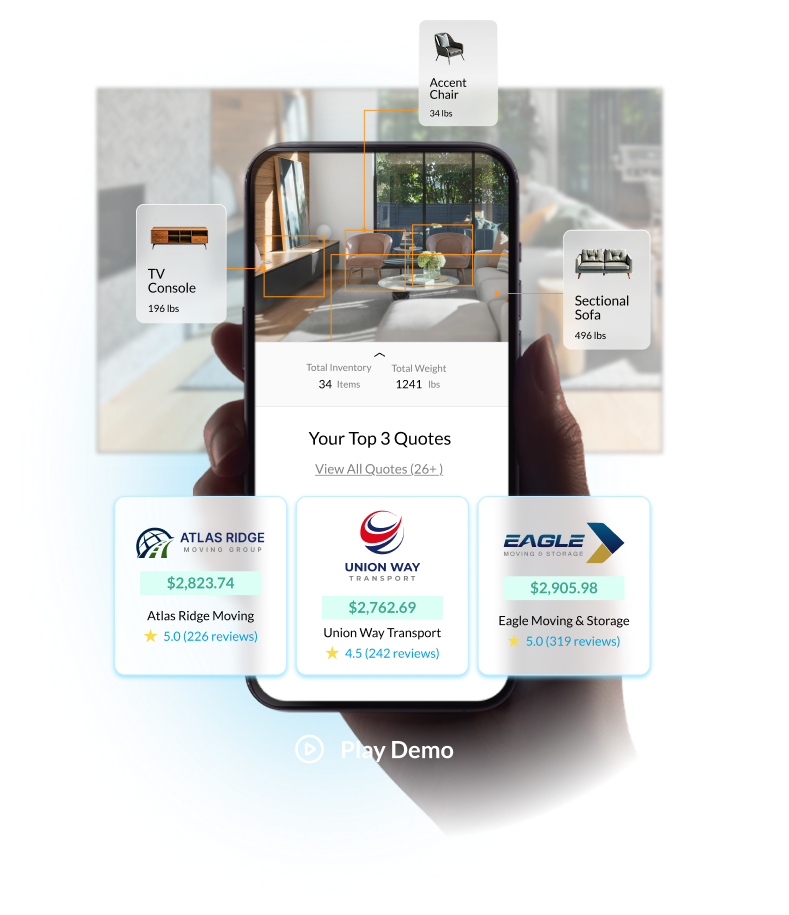
Apartments are where guessed inventories hurt most, because the load has to fit an elevator, a stairwell, and a smaller floor plan. On Agoyu you scan your rooms with your phone and the platform builds the inventory from what you actually own, then shows the exact cost to move through the movers in the platform, or lets you post the move for bids. Movers with a truck already routed your way can bid for the space they need to fill, which is often where apartment sized loads get their best prices.
Every price sits next to the mover’s Trust Signals: a link to the mover’s US DOT license, its BBB rating, and its Yelp reviews, plus IAM and FIDI profiles where a mover holds them. Check the record next to the price, not instead of it. Your booking documents the inventory, the agreed price, and the pickup and delivery terms in the platform, and every move booked through Agoyu includes full insurance with no deductible up to $100,000. If your move is long distance, the platform’s 86 long distance movers are the pool your bids come from.
Frequently Asked Questions
When should I start an apartment moving checklist?
Eight weeks out is the comfortable version, and it is the timeline this page uses. Six weeks still works if you book movers and reserve elevators immediately. Under four weeks, protect the non negotiables in order: mover or truck, building reservations, address and utility changes, and your essentials bag.
What do I need to reserve with my building before moving?
In most buildings with facilities management: the elevator, a loading or parking spot for the truck, and approval of your moving date and hours. Many buildings also require a certificate of insurance from your moving company. Ask both your current and your new building early, because an unreserved elevator is one of the most common reasons apartment moves stall on the day.
What should I buy first for a new apartment or first home?
Safety and function before decor: working smoke and carbon monoxide detectors, a fire extinguisher, a first aid kit, basic kitchen gear to cook and eat, bathroom basics including a plunger, bedding, and cleaning supplies. The room by room first week list on this page is ordered that way on purpose.
How do I protect my security deposit when moving out?
Photograph the new apartment’s condition when you arrive and the old apartment’s condition when you leave, do the final walkthrough your landlord offers, clean after the furniture is out, and keep the photos and paperwork in your move folder. Deposit rules and timelines vary by state and by lease.
Should I hire movers for an apartment move?
If your building has stairs, a strict move window, or a freight elevator schedule, professional movers earn their price in speed and in knowing the building routine. If you are on a low floor with flexible timing and a small load, a rental truck can be the cheaper honest option. Either way, get the inventory right first, because every quote is built on it.
What goes in a first night essentials bag?
Chargers, medications, toiletries, a change of clothes, basic tools, tape and a box cutter, trash bags, toilet paper, soap, snacks, water, and pet supplies if you have a pet. Keep it in your car or on your person, never on the truck.
How does Agoyu price an apartment move?
You scan your rooms and the patented AI platform (U.S. Patent No. 12,602,645 B2) builds the inventory, then shows exact published prices from movers in the platform or takes bids on your posted move. Each price is shown with the mover’s US DOT license link, BBB rating, and Yelp reviews, and every booked move includes full insurance with no deductible up to $100,000.
Start With the Scan, Then Work the Checklist
A checklist tells you what to do and when. It cannot tell you what your move costs, because that number lives in your inventory, your building, and your dates. Scan your rooms, see the exact prices, compare the movers’ records next to their prices, and book with the agreement documented and $100,000 of no deductible insurance included. Then work this list week by week, and move day becomes the shortest part of the move.


