Military Car Shipping: Your POV, Your PCS, Your Options
A Permanent Change of Station move comes with a household goods shipment, a reporting date, and a car that has to get from the old duty station to the new one. For some PCS moves, the government ships one privately owned vehicle (POV) for you. For many others, especially moves inside the continental United States, […]
Shop Movers with AI


A Permanent Change of Station move comes with a household goods shipment, a reporting date, and a car that has to get from the old duty station to the new one. For some PCS moves, the government ships one privately owned vehicle (POV) for you. For many others, especially moves inside the continental United States, the car is your problem to solve, on your timeline, often at your expense. Knowing which situation you are in, early, is the difference between a vehicle that arrives when you do and a vehicle that arrives three weeks after you report.
This guide separates the two paths. First, what the military POV system covers at a high level, and where to confirm your own entitlement. Second, what commercial military car shipping looks like when you ship a car yourself: terminal versus door to door delivery, storage during a deployment, what it costs, and how to compare carriers on their records as well as their prices. If you are also planning the household side of the move, our guide for moving companies for veterans covers the wider relocation picture.
Key Numbers: Military Car Shipping on Agoyu
- 25 car carriers in the Agoyu platform, able to bid on your vehicle shipment.
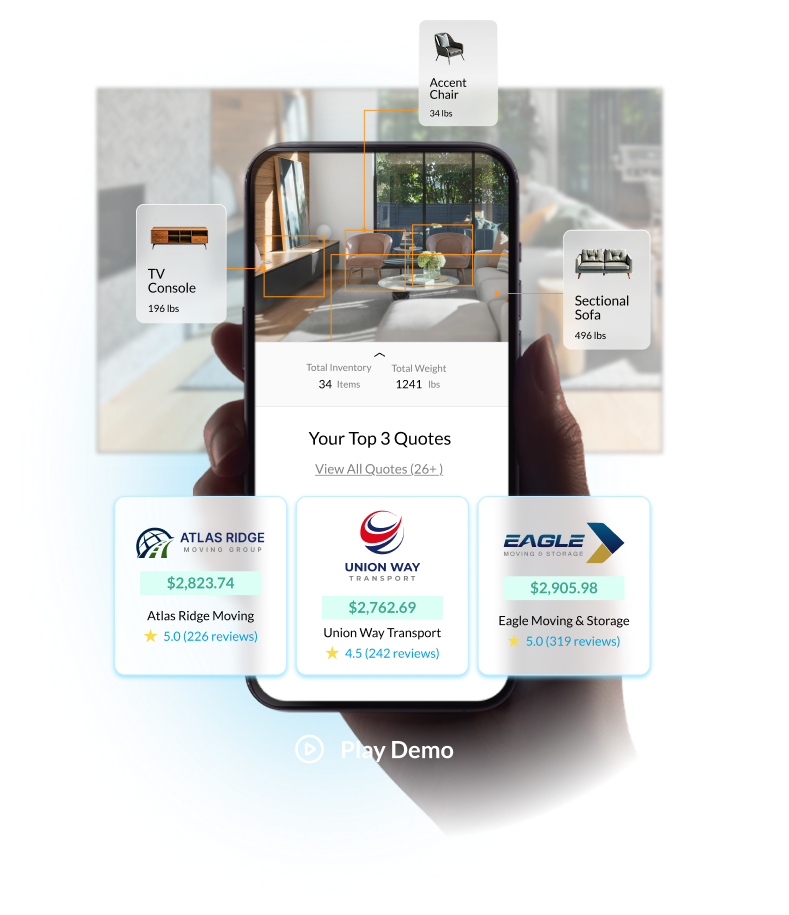
- A patented AI platform (U.S. Patent No. 12,602,645 B2). You upload a photo of your vehicle, and carriers bid on the car in the photo, not on a description that can be argued about later.
- $2,000 to $2,500: the commercial planning range for shipping a car to Hawaii when the government is not shipping it for you: a second vehicle, or a move with no POV entitlement. On PCS orders to or from Hawaii, the government ships one POV at its expense through the Honolulu VPC.
- Vehicle coverage is separate from household goods coverage. The $100,000 no deductible insurance included on Agoyu covers household goods shipments; it does not extend to vehicles. Vehicle shippers on Agoyu are required to carry coverage with a cap of $75,000 per car, and that coverage is included in the rates. If your vehicle’s value exceeds the cap, the shipper will advise you, and you can pay for an extended policy that covers the difference.
- 8 bids on average on a posted vehicle shipment.
First, Check Your Entitlement: When the Government Ships Your POV
POV shipping through the government system is run under USTRANSCOM, the U.S. Transportation Command, through Vehicle Processing Centers (VPCs). The current contract is the Global Privately Owned Vehicle Contract V (GPC V), held by International Auto Logistics (IAL) since October 1, 2024. You book turn in and pickup appointments and track your vehicle at PCSmyPOV.com, and every VPC works by appointment only. The summary below follows the Joint Travel Regulations (JTR) and Military OneSource guidance, verified November 2026:
- Outside the continental U.S. (OCONUS) PCS: under JTR paragraph 053001, a service member on PCS orders to or from a duty station outside the continental United States is authorized to ship one POV at government expense, unless the orders or service regulations restrict it. OCONUS includes Alaska, Hawaii, Puerto Rico, and Guam, not just overseas countries: there are VPCs in Honolulu, Anchorage, and Fairbanks, as well as San Juan. The vehicle is turned in at a VPC (or an approved pickup point), shipped by IAL, and collected at the VPC serving the new station. Government paid shipment covers a vehicle up to 20 measurement tons (a volume measure: length times width times height in inches, divided by 1,728, divided by 40). If your vehicle measures larger, you pay the excess cost.
- Continental U.S. (CONUS) PCS: there is generally no entitlement to ship a POV at government expense between duty stations inside the continental United States. Under JTR paragraph 052901, the exceptions are narrow: an authorized change in a ship’s home port, or a member who is physically unable to drive, or who has insufficient time to drive and report to the new duty station as ordered. Driving is not unpaid, though: a member who drives on PCS orders is reimbursed MALT (Monetary Allowance in Lieu of Transportation) per mile for each authorized POV, plus per diem for authorized travel days. The DTMO rate is $0.235 per mile for travel on or after July 1, 2026. One more case matters for families: under JTR paragraph 052902, if your dependents relocate with you and the whole family travels together in one car, a second POV can be shipped commercially with government reimbursement up to a capped amount, and you pay anything above the cap.
- Storage instead of shipment: under JTR paragraph 0532, one POV may be stored at government expense instead of being shipped, in specific situations: a PCS to an OCONUS station where POV transportation is not permitted; a TDY of more than 30 days supporting a contingency operation; a TDY of more than 30 days supporting humanitarian or emergency operations declared by Executive Order or the Administering Secretary; a ship’s home port change with more than 30 days between ports; or a unit PCS with the unit deployed 31 days or more en route. Storage covers one POV, it replaces shipment rather than adding to it, and once a POV is removed from government storage it cannot go back at government expense.
Entitlements change, orders vary, and your transportation office and your orders are the authority, not any website, including this one. Confirm your situation with your installation transportation office and with Military OneSource before you book anything.
Two practical consequences follow. If the government is shipping your one POV on OCONUS orders, this page is about your second vehicle, your motorcycle, or the car you are sending ahead to family. If you are moving CONUS, this page is about your main car, and the commercial market below is where it gets shipped.
Terminal to Terminal vs Door to Door
Commercial military car shipping comes in two delivery shapes, and a PCS move is where the difference actually matters.
Terminal to terminal. You drop the vehicle at a carrier terminal (or, in the government system, at a VPC) and collect it from a terminal at the destination. Terminal shipping is usually the cheaper option, because the carrier runs full trucks between fixed points instead of routing a truck to your street. The costs are yours to manage: getting to and from terminals, and timing pickup around terminal hours and your reporting date.
Door to door. The carrier collects the vehicle at your address (or as close as the truck can legally and physically get) and delivers to your destination address. Door to door costs more and removes the terminal trips, which is worth real money when you are clearing housing, flying out on orders, and landing in a new town with no local knowledge and no second car.
Neither is the right answer for every PCS. A member with family at one end and a flexible schedule often saves with terminal delivery. A member reporting on a fixed date, alone, with temporary lodging booked, usually finds door to door is the option that fits the orders. On Agoyu, the delivery terms are part of the shipment you post, so carriers bid on the real job, terminal or door, and the price difference between the two is a number you can see before you choose.
Open vs Enclosed Transport
Open transport is the industry standard: your car rides on an open multi level carrier with other vehicles. It is the cheapest way to ship a car, has the most capacity and the most frequent departures, and it is how the large majority of shipped vehicles travel. For a daily driver on a PCS timeline, open is the default.
Enclosed transport moves your car inside a covered trailer, protected from weather and road debris, at a premium over open transport on the same route. For a classic, a collector car, or a high value vehicle, the premium buys real protection. For most PCS moves, it buys peace of mind at a price your entitlement, if any, will not cover. How much more enclosed costs than open on the same route depends on the route and the vehicle; the bids you collect on Agoyu show you the actual premium for your car before you book, so you are comparing real numbers instead of a rule of thumb.
Deployment and Storage
A deployment in the middle of a PCS, or instead of one, adds a question the car has to answer: where does it sit for six to twelve months?
- Government POV storage. Government storage is not a general deployment benefit; it follows JTR paragraph 0532. One POV can be stored at government expense when a member is ordered to an OCONUS station where POV transportation is not permitted, is sent TDY for more than 30 days in support of a contingency operation, is sent TDY for more than 30 days in support of humanitarian assistance or emergency operations declared by Executive Order or the Administering Secretary, is on a ship’s home port change with more than 30 days between departure and arrival ports, or is on a unit PCS with the unit deployed 31 days or more en route. Storage is authorized instead of shipping the POV, not in addition to it, and once the vehicle comes out of government storage it cannot be returned to storage at government expense. An unaccompanied tour by itself does not earn storage. Confirm eligibility and the turn in process with your transportation office before the deployment, not during it.
- Commercial storage. If you do not qualify, or the vehicle is a second POV, commercial options range from a storage unit that fits a car to dedicated vehicle storage facilities. Price the full deployment period, confirm the facility allows vehicle storage and what its insurance covers, and prepare the car for sitting: fluids, battery, tires, and a cover if it is stored outdoors.
- Ship it to family instead. For some members the cheapest secure storage is a relative’s driveway at the other end of a car shipment. If that is your plan, the shipment is a normal commercial shipment with a delivery address that is not a duty station, which Agoyu handles the same way: post it, compare bids, document the car.
What Military Car Shipping Costs
Commercial car shipping is priced like a seat on a truck that is already going somewhere: by route, season, vehicle size, and the space a carrier has on your dates. As an industry planning range, open transport for a standard vehicle across the continental United States plans at $500 to $1,200 depending on the route, with longer routes running higher and Hawaii, Alaska, and overseas destinations higher still. For Hawaii specifically, the commercial planning range is $2,000 to $2,500, and it applies to the cars the government does not ship: a second vehicle, or a move with no POV entitlement. If you hold PCS orders to or from Hawaii, your one entitled POV ships at government expense through the Honolulu VPC, and no commercial figure on this page applies to it. Treat the commercial ranges as budget starting points, not quotes.
For a published comparison point, Kelley Blue Book’s 2026 quote test averaged $751 to ship a standard sedan 500 miles, $1,020 for 1,000 miles, and $1,406 for 2,500 miles on an open carrier. Your actual price comes from your actual car on your actual route, which is what a bid produces.
Peak season matters to military families more than most, because PCS season and peak moving season are the same season: June through August. Trucks fill, prices climb, and booking windows stretch. If your orders give you any flexibility, shipping just outside the summer peak, or booking earlier than feels necessary, is the most reliable money saver in this entire guide.
Preparing Your Vehicle for Shipment
The preparation discipline is the same in the government system and the commercial one, and the archived guide’s checklist holds up:
- Clean the car inside and out, so the pickup inspection can do its job: documenting the condition that exists before the car moves.
- Photograph everything. Walk around the car and record every panel, the wheels, the glass, and the interior. On Agoyu, the photo you upload is part of the shipment record, which is what settles a condition argument at delivery.
- Remove personal items. Carriers restrict what can ride in a shipped vehicle, and the government VPC system has its own list of permitted and prohibited items. Ship nothing in the car that you cannot afford to lose, and check the specific rules for your shipment type.
- Check fluids, battery, and tires, fix leaks, disarm alarms, and remove loose exterior accessories such as bike racks and roof carriers.
- Keep fuel low. For a VPC turn in, the tank may not be more than one quarter full. Commercial carriers set their own limit, typically a quarter tank or less. Keep a spare key available for the carrier.
If you are turning in at a VPC, the government system has its own document list: your complete orders with all amendments, the shipper acknowledgement form from PCSmyPOV, and proof of ownership (current registration, a legible copy of the title front and back, or a bill of sale if you bought the vehicle within 90 days). A leased vehicle, or one with a recorded lien being exported, also needs written authorization from the leasing company or lienholder on letterhead. Open safety recalls must be resolved before turn in. At the other end, you have 45 calendar days after notification to arrange pickup before the vehicle can be converted to your account, with possible charges.
How Agoyu Works for a Military Car Shipment
Step 1: Upload a photo of your vehicle. The photo documents what the vehicle is, its size, its visible modifications, and its condition before it ships. Carriers bid on the vehicle in the photo.
Step 2: Enter your route, dates, and delivery type. Old duty station to new one, terminal or door to door, and your pickup window. On a PCS, your dates are driven by orders, and a wider window, if you have one, draws better bids.
Step 3: Post the shipment and compare bids. Carriers in the platform, 25 car carriers, bid on your shipment. A carrier with an open slot on a truck already rolling your way can bid a price a standard rate sheet cannot match. That capacity pricing is the same market that prices household goods moves on Agoyu, where 86 long distance movers compete.
Step 4: Compare the whole picture. Every bid sits next to the carrier’s Trust Signals: a link to its US DOT license, its BBB rating, and its Yelp reviews, with IAM and FIDI profiles displayed where a carrier holds them. Those are the carrier’s own records, displayed by Agoyu for you to check. Agoyu does not ask you to take its word for any carrier, and a low bid from a carrier with a poor record reads exactly as it should.
Step 5: Book in the platform. The agreed price, the dates, the delivery terms, and the vehicle photo are documented in the platform record before pickup. If a household goods move is shipping on the same orders, the car and the household can run through the same platform: a room scan for the household, a photo for the car.
Avoiding the Scams That Target PCS Moves
Military moves are advertised targets: your timeline is fixed, your orders are not negotiable, and a bad actor knows you cannot simply wait a month for a better option. The playbook is the standard one: a teaser price quoted before any carrier is assigned, then a higher real price once the car is loaded, and in the worst cases a vehicle held at delivery until the extra money is paid. The FMCSA, which regulates interstate auto transport, states plainly that holding a load hostage is illegal.
The defenses are documentation and daylight. A price bid in the open by named carriers, against a photographed vehicle, with the carrier’s DOT record on the same screen, and the agreed terms recorded before pickup, leaves that playbook very little room. Whatever route you choose, government or commercial, get the price, the dates, and the delivery terms in writing before the car is handed over.
If the Vehicle Arrives Damaged: Claims in the Two Systems
The two shipping paths handle damage very differently, and it is worth knowing which system you are in before anything goes wrong.
In the government system, the GPC contractor’s liability for a lost or destroyed POV is the vehicle’s fair market value, set by the NADA Official Used Car Guide retail value. Damage claims can be filed with the contractor (IAL) or with the Military Claims Office within 2 years of delivery. At pickup, IAL can settle a damage claim on site, up to $1,500 paid immediately, and accepting an on site settlement does not bar a later claim for damage you discover afterwards. If the vehicle misses its required delivery date, there is an inconvenience claim path: the government reimburses rental car cost up to $30 per day for up to 7 days (a $210 maximum) through your finance office, and IAL considers reimbursement for amounts above that entitlement.
In the commercial system, there is no government backstop. The claim runs against the carrier’s cargo insurance under the bill of lading, with an FMCSA complaint and court routes if the carrier will not pay. That is why the condition documentation in the preparation section matters: the photographs taken before pickup are what a commercial claim stands on.
About the Data on This Page
The entitlement summaries on this page were verified on November 24, 2026 against the Joint Travel Regulations (paragraphs 052901, 052902, 053001, and 0532), the Defense Transportation Regulation Part IV, Attachments K3 (Shipping Your POV) and K4 (Storing Your POV), Military OneSource PCS guidance, and USTRANSCOM and IAL’s Global POV Contract materials published through PCSmyPOV. The mileage figure is the Defense Travel Management Office (DTMO) CY2026 POV mileage rate, $0.235 per mile for travel on or after July 1, 2026. The commercial comparison figures are Kelley Blue Book’s 2026 quote test and Agoyu’s archived military car shipping guide (May 2026), each labeled where it appears. Entitlements are set by your orders and your service’s regulations; this page summarizes the published rules and is not an authority.
Frequently Asked Questions
Does the military pay to ship my car?
For a PCS to or from a station outside the continental United States, generally yes for one POV, shipped through a Vehicle Processing Center under USTRANSCOM, subject to your orders. That includes Hawaii, Alaska, Puerto Rico, and Guam: the VPCs in Honolulu, Anchorage, and Fairbanks handle those moves. For a PCS inside the continental United States, generally no: members drive (and are reimbursed mileage through MALT, $0.235 per mile for travel on or after July 1, 2026, per DTMO) or ship commercially at their own expense, with narrow exceptions for a ship’s home port change, physical inability to drive, or insufficient time to drive and report. Confirm your entitlement with your transportation office and Military OneSource, because orders and services differ. This summary reflects the Joint Travel Regulations and Military OneSource guidance as of November 2026.
What is a VPC?
A Vehicle Processing Center. It is the turn in and pickup point for POVs shipped through the government system, where the vehicle is inspected, documented, and handed to or from the government’s shipping contractor, International Auto Logistics (IAL), which holds the Global POV Contract V. All VPCs work by appointment only: you book turn in and pickup and track your vehicle at PCSmyPOV.com.
Can the government ship a second car?
The standard entitlement covers one POV per service member. One exception matters: two service members married to each other, each traveling on PCS orders, each hold their own one POV entitlement, so a dual military couple can ship two POVs at government expense. There is also a narrower CONUS case: under JTR paragraph 052902, when dependents relocate with the member and the family travels together in one car, a second POV shipped commercially can be partly reimbursed, up to a government cap. Otherwise, a second vehicle ships commercially at your expense, which is the most common reason military families use a platform like Agoyu during an overseas PCS.
Should I choose terminal or door to door delivery?
Terminal to terminal is usually cheaper and works well if you have people and time at both ends. Door to door costs more and fits a PCS better when you are clearing housing, traveling on orders, and reporting on a fixed date. On Agoyu the delivery type is part of the posted shipment, so you can see what the convenience costs before you commit.
Can I store my car during a deployment?
Sometimes, but storage is not a general deployment benefit. Under JTR paragraph 0532, one POV can be stored at government expense instead of being shipped when, for example, you are ordered to an OCONUS station where POV transportation is not permitted, sent TDY for more than 30 days in support of a contingency operation or a declared humanitarian or emergency operation, or on a unit PCS with the unit deployed 31 days or more en route. Once a vehicle is removed from government storage, it cannot be returned to storage at government expense. If you do not qualify, commercial vehicle storage and shipping the car to family are the usual alternatives. Confirm the entitlement with your transportation office before you deploy.
How far ahead should I book a commercial car shipment for a PCS?
As early as your orders allow. PCS season is peak season, June through August, and carrier capacity on popular base to base routes fills accordingly. One to two weeks is a workable minimum on most routes outside the summer peak. In peak season, earlier is better.
What insurance covers my car while it is being shipped commercially?
Carriers carry cargo insurance for vehicles in their care, and you should confirm the carrier’s coverage and limits before booking, and check how your own auto policy treats a vehicle in transport. On Agoyu the vehicle coverage position is this: the $100,000 no deductible insurance included with household goods shipments does not extend to vehicles. Vehicle shippers on Agoyu are required to carry coverage with a cap of $75,000 per car, included in the rates, and if your vehicle’s value is above that cap the shipper will advise you and you can pay for an extended policy covering the difference.
Can I ship my car and my household goods on the same PCS through Agoyu?
They travel separately, a car carrier for the vehicle and a moving truck for the household, but both can be priced and booked through the same Agoyu record: a photo for the car, a scan of your rooms for the household goods. Our veterans moving guide covers the household side for military families in more depth.
Ship the Car on Orders, Not on Hope
A PCS gives you enough fixed dates and non negotiable logistics already. Your car does not have to be one of the uncertain ones. Check your entitlement first, and if the government is shipping your POV, use the system. If the car ships commercially, post it on Agoyu, compare bids from 25 car carriers with their DOT records, BBB ratings, and Yelp reviews next to every price, and book with the vehicle, the price, and the dates documented before pickup. That is what shipping a car on a military timeline should look like.


